
Call us now :08071780343
 Send Inquiry
 Send Inquiry
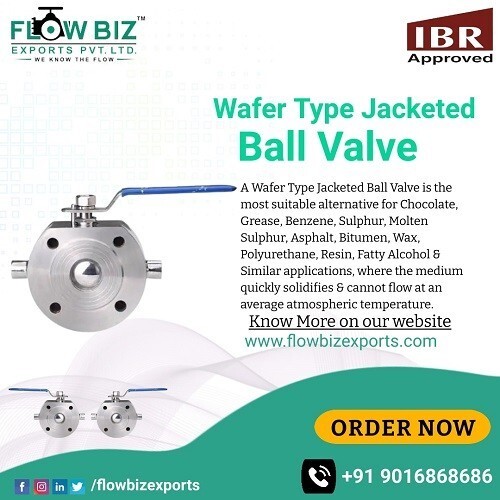
Heavy Duty Wafer Type Ball Valve Manufacturer in Gandhidham
Price 1500.0 INR/ Number
MOQ : 1 Number
Heavy Duty Wafer Type Ball Valve Manufacturer in Gandhidham Specification
- Structure
- Wafer Type Ball Valve
- Channels
- Single Channel
- Pressure
- PN10, PN16, PN25, PN40
- Connection
- Wafer Flanged
- Caliber
- Full Bore
- Material
- Stainless Steel, Carbon Steel, Alloy Steel
- Power
- Manual
- Media
- Water, Gas, Oil, Steam
- Temperature of Media
- -20°C to 200°C
- Port Size
- DN15 to DN300
- Flange
- ANSI, DIN, JIS Standard Flanges
- Finish
- Electro Polished / Painted
- Application
- Chemical, Petrochemical, Power Plant, Water Treatment, Oil & Gas
- Operation
- Lever / Gearbox
- Design Standard
- ISO 5211 / API 6D
- Body Material Grade
- SS304 / SS316 / WCB
- End Connection
- Wafer type between flanges
- Testing Standard
- API 598
- Antistatic Design
- Available
- Ball Material
- SS316 / SS304
- Stem Material
- SS316
- Leakage Class
- Class VI
- Fire Safe Design
- Available
- Face to Face
- EN 558-1 Series 36
- Seat Material
- PTFE / RPTFE / Metal Seated
Heavy Duty Wafer Type Ball Valve Manufacturer in Gandhidham About
High-Performance Wafer-Type Ball Valves | FlowBiz Valves
FlowBiz Valves is a premier, engineering-driven manufacturer, supplier, and global exporter of high-yield Wafer-Type Ball Valves in India. Operating from our state-of-the-art production infrastructure across Ahmedabad, Mumbai, and Gandhidham, FlowBiz produces the largest volume of wafer-type ball valves nationwide, cementing our position as the undisputed industry leader in ultra-compact fluid isolation technology.
The FlowBiz wafer-type series features an ultra-short face-to-face footprint designed to slide effortlessly between two standard pipeline flanges. Clamped securely by long through-bolts, this lightweight, single-piece casing significantly reduces total pipeline load and material costs. This makes it an exceptionally economical and highly reliable choice for light-duty to demanding industrial setups across chemical processing, power plants, water treatment facilities, and oil & gas loops.
Technical Specifications & Compliance Matrix
Our wafer-type production series is precision-machined and rigorously tested to satisfy strict international pressure vessel and pipeline criteria:
| Parameter | Technical Specification & Engineering Limits |
| Bore Configuration | Full Bore Design (Maximized flow throughput with near-zero pressure drop) |
| Size Matrix Spectrum | Broad availability from DN15 to DN300 (1/2" inch up to 12" inches) |
| Pressure Rating Matrix | Fully certified across PN10, PN16, PN25, and PN40 pressure vectors |
| Core Design Standards | Fully compliant with API 6D, ISO 5211, and EN 558-1 Series 36 |
| Testing Compliance Codes | 100% hydrostatically and pneumatically verified per API 598 protocols |
| Isolation Rating | ANSI/FCI 70-2 Leakage Class VI (Absolute bubble-tight containment) |
| Core Metallurgy Grades | Stainless Steel (SS304, SS316), Carbon Steel (WCB), or Alloy Steel |
| Trim Composition | High-durability SS304 or SS316 mirror-polished balls and stems |
Salient Features & Mechanical Benefits
1. Simple Visual Status Verification
Manual line regulation is engineered for intuitive on-site operation. When the heavy-duty lever handle lies in perfect alignment with the pipeline, the valve is fully open. Turning the lever a swift quarter-turn (90) places it perpendicular to the line, indicating a fully closed status. This provides a clear, foolproof visual verification of the valve's status for plant operators at a distance.
2. Comprehensive Anti-Blowout Stem & Push-Type Gland
To ensure absolute operator field safety under unexpected pressure surges, every valve is engineered with a bottom-entry anti-blowout stem that cannot be ejected from the casing. Paired with a push-type gland assembly, this design provides uniform packing compression, low operating torque, a positive atmospheric seal, and an exceptionally long operational lifespan.
3. Zero Holdup Area & Interchanging Spares
The internal cavity of the valve is structurally streamlined to feature a zero holdup area. This eliminates dead zones where fluid media can stagnate, accumulate, or degrade over time, ensuring maximum purity in sensitive chemical loops. Additionally, strict adherence to global dimensional tolerances guarantees complete interchangeability of spares, simplifying maintenance and lowering warehouse inventory costs.
4. Integral ISO 5211 Mounting Pad
Every valve body includes an integral ISO 5211 mounting pad cast directly into the top works as standard. This standardized interface permits direct-mount installation of pneumatic cylinders or electric actuators without requiring expensive external brackets or couplings. This design ensures seamless automation integration for future system upgrades.
            [ MANUAL ACTUATOR ]               [ AUTOMATED SCADA RETROFIT ]
        Ergonomic Lever Handle with             Direct Bracketless Coupling via
         Swift Visual Status Check                 Integral ISO 5211 Top Pad


                        FlowBiz Precision Wafer-Type Ball Valve
Advanced Sealing & Hazard Protection Options
Achieving long-term valve durability requires matching the internal seat trim to the specific chemical, thermal, and mechanical stresses of your process fluid:
-
PTFE & RPTFE Seats: Reinforced polymers that offer near-total chemical inertness, low breakout torque, and excellent sealing capabilities for water, gases, and light chemicals.
-
Severe-Service Metal Seats: Precision hard-faced metallic options engineered to handle high-temperature steam, thermal oils, or abrasive media where soft polymers would fail.
Fire-Safe & Anti-Static Safety Grid
For applications handling flammable fluids or operating in explosion-prone chemical plants and petrochemical refineries, our wafer series incorporates certified fire-safe and anti-static features. The anti-static grid maintains permanent electrical continuity between the ball, stem, and valve body to safely dissipate static electricity generated by fluid friction. Meanwhile, the fire-safe construction incorporates backup metallic sealing lips that stop hazardous fluid leakage if a fire destroys the primary soft seats.
Frequently Asked Questions (FAQs)
Q: How does the wafer-type ball valve fit between flanges in a piping system?
A: The wafer-type ball valve is engineered without extended flanged necks or independent bolt holes. Instead, it features a highly compact, low-profile cylindrical body machined to match standard ANSI, DIN, or JIS flange diameters. To install it, technicians slide the valve between two existing pipe flanges and run standard bolts completely across the outside of the valve casing, clamping the assembly tightly together against the pipe gaskets to form a secure, leak-free joint.
Q: What distinct benefits does a true full bore structure offer in process loops?
A: In a full bore design, the inner diameter of the rotating ball matches the internal diameter of the connected pipeline exactly. When fully opened, the valve creates a completely unobstructed flow path. This minimizes fluid turbulence, keeps pressure drops near zero, and allows for easy inline cleaning or mechanical pigging operations, which maximizes overall process throughput and efficiency.
Q: Why choose FlowBiz as your long-term wafer-type ball valve partner in India?
A: FlowBiz Valves balances rigorous industrial engineering with mass-production efficiency. By manufacturing our valves to strict standards like API 6D and ISO 5211, ensuring compliance with face-to-face dimensions according to EN 558-1 Series 36, and proof-testing 100% of our production lines to meet Class VI zero-leakage parameters, we eliminate operational risks. Our ability to supply high-quality, cost-effective wafer ball valves from DN15 to DN300 makes us a highly dependable supply chain partner for critical process installations across India and global export loops.
Tell us about your requirement

Price:
Quantity
Select Unit
- 50
- 100
- 200
- 250
- 500
- 1000+
Additional detail
Mobile number
Email

More Products in Ball Valve Category
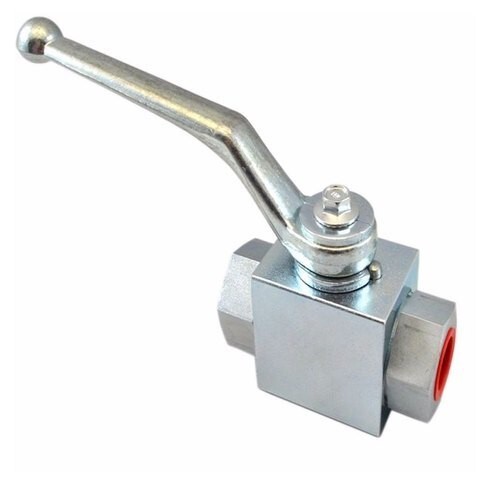
Heavy Duty High Pressure Ball Valves
Price 2000.0 INR / Piece
Minimum Order Quantity : 1 Piece
Finish : Polished or Painted
Media : Other, Water, Oil, Gas, Chemical
Material : Other, Stainless Steel / Carbon Steel
Application : Industrial, Chemical, Petrochemical, Oil & Gas
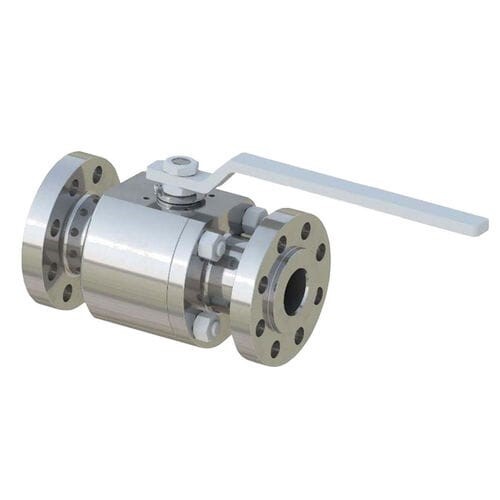
Metal Seated Flangeds Ball
Price 2000 INR / Unit
Minimum Order Quantity : 1 Number
Finish : Epoxy Coated / PTFE Lined / Polished
Media : Other, Water, Oil, Gas, Air, Steam
Material : Other, Stainless Steel / Carbon Steel / Alloy Steel
Application : Chemical, Petrochemical, Power, Water Treatment, Oil & Gas
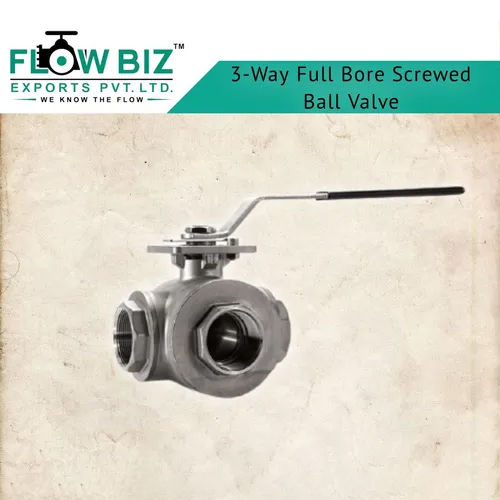
3 Way Full Bore Screwed Ball Valve
Price 1200 INR / Unit
Minimum Order Quantity : 1 Unit
Finish : Polished
Media : Gas
Material : Brass
Application : Industrial
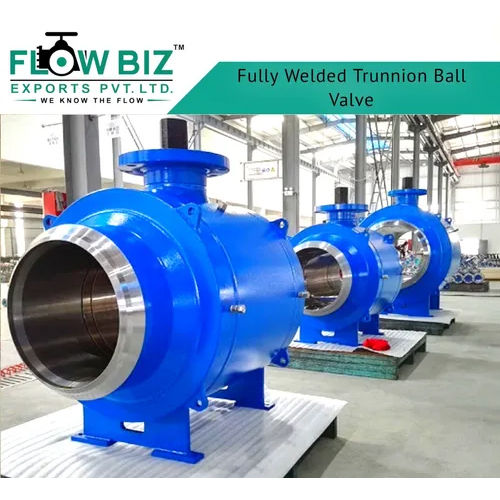
Fully Welded Body Trunnion Ball Valves
Price 15000 INR / Unit
Minimum Order Quantity : 1 Unit
Finish : Painted
Media : Gas
Material : Brass
Application : Industrial

 Send Inquiry
Our Products
- Needle Valve
- Ball Valve
- Globe Valve
- Gate Valve
- Y Type Strainer
- Piston Valve
- Check Valve
- Sight Glass
- Butterfly Valve
- Swing Check Valve
- Damper Valve
- Basket Strainer
- Pressure Reducing Valve
- Double Block Bleed Valve
- Moisture Separator
- Forged Valve
- Diaphragm Valve
- Mini Ball Valve
- Forbes Marshall PRV
- T Type Strainer
- Plug Valve
- Blow Down Valve
- Air Valve
- Non Return Valve
- Safety Valve
- Steam Trap
- Gasket
- L&T Ball Valve
- L&T Butterfly Valve
- AUDCO Ball Valve
- SPIRAX Marshall PRV
- Solenoid Valve
- oxygen
- roto seal coupling
- straight union
- flow control
- ptfe sheets
- ptfe
- rubber products
- felt products
- Asbestos products
- Engineered plastics products
- rubber seals
- rubber gasket
- Sight Glasses
- Jacketed Valves
- flush bottom valve
- strainer
- Sluice Gate Valve
- Slab Gate Valve
- PTFE Lined Valve
- PTFE Lined Valves


416,417 4th Floor, A Block Safal 8, Ajit Mill, Cross Rd, Rakhial,Ahmedabad - 380023, Gujarat, India

Mr Shakir Ansari
(Director)
Mobile :08071780343
 Send Inquiry
 Send SMS
 Call Me Free
Developed and Managed by Infocom Network Private Limited.
