
Call us now :08071780343
 Send Inquiry
 Send Inquiry
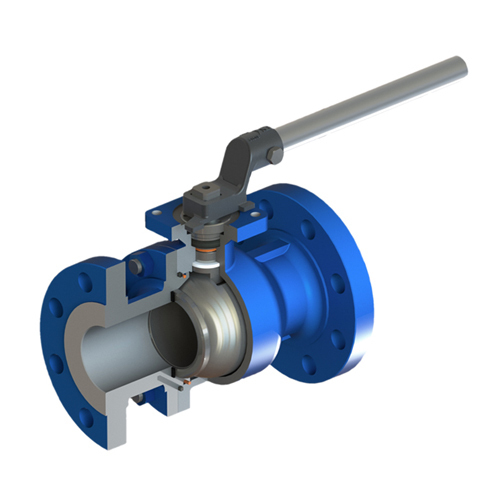
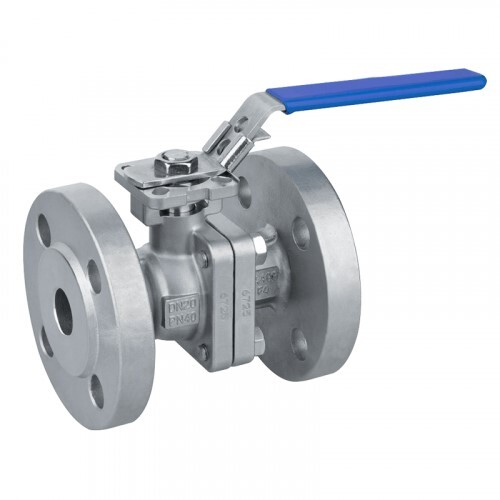
Metal Seated Valve Ball
Price 800 INR/ Unit
MOQ : 1 Number
Metal Seated Valve Ball Specification
- Pressure
- Class 150 to Class 2500 (PN16PN420)
- Structure
- Floating / Trunnion Mounted
- Caliber
- Full Bore / Reduced Bore
- Connection
- Flanged / Screwed / Welded
- Channels
- 2-Way / 3-Way
- Material
- Stainless Steel / Alloy Steel / Carbon Steel
- Power
- Manual / Pneumatic / Electric
- Media
- Water, Gas, Oil, Steam, Chemical
- Temperature of Media
- -29C to +425C
- Port Size
- 1/2 to 16 (DN15DN400)
- Flange
- ANSI / DIN / BS Standard
- Finish
- Precision Machined, Corrosion Resistant
- Application
- Petrochemical, Power Plant, Oil & Gas, Water Treatment, Chemical Processing
- Design Standard
- API 6D / BS 5351 / ASME B16.34
- Ball Material
- A105 / F304 / F316 / Duplex
- Seat Type
- Metal to Metal
- End Connection
- Butt Weld / Socket Weld / Threaded
- Leakage Rating
- ISO 5208 Rate A, Zero Leakage
- Anti-static Device
- Provided
- Stem Seals
- PTFE / Graphite
- Coating
- PTFE or Hard Chrome Plated Ball
- Blowout Proof Stem
- Yes
- Operation
- Quarter Turn
- Fire Safe Design
- Available as per API 607
- Body Test Pressure
- 1.5 x Rated Pressure
Metal Seated Valve Ball About
Severe-Service Metal-Seated Ball Valves | FlowBiz Exports
FlowBiz Exports is a leading, engineering-driven manufacturer, supplier, and global exporter of industrial severe-service isolation systems. Operating from our advanced production facilitieswith dedicated technical supply divisions in Kheda, Gujarat, Indiawe precision-engineer premium Metal-Seated Ball Valves. These valves are built to withstand the harshest mechanical and thermal environments where standard soft elastomeric or polymer seats would rapidly degrade, deform, or completely fail.
Clarifying a Common Industry Misconception
Some industry sources mistakenly describe a metal-seated ball valve as a check valve that uses a seated disc or claim that it closes off flow when in the open position. Let's clear that up directly:
Not a Check Valve or Disc Valve: A ball valve is a quarter-turn rotary isolation valve that utilizes a high-precision, spherical bored ball to manage medianot a self-actuated check valve or linear disc.
True Operational Logic: In the open position, the ball's internal bore aligns precisely with the pipeline axis to permit unobstructed flow. Rotating the stem exactly 90 turns the solid face of the ball into the path of the fluid, shutting off the flow.
Our metal-to-metal seating series is specifically engineered for severe industrial processes, providing high wear resistance and absolute inline isolation across the Oil & Gas, Refining, Petrochemical, Power Generation, Chemical Processing, Pulp & Paper, and Mining sectors.
Technical Specifications & Compliance Matrix
Our severe-service metal-seated valves are precision-machined from traceable stock to satisfy strict international pressure vessel and pipeline criteria:
| Parameter | Technical Specification & Engineering Limits |
| Design Standards | Fully engineered in strict compliance with ISO 17292 and API 6D |
| Testing Standards | 100% hydrostatically and pneumatically verified per BS 6755 and API 598 |
| Pressure-Temperature Ratings | Designed in strict accordance with ASME B16.34 parameters |
| Flange Dimensions | Precision-machined flange drillings matching ASME B16.5 |
| Face-to-Face Standards | Standardized inline structural lengths conforming to ASME B16.10 |
| Isolation Integrity | ISO 5208 Rate A / ANSI Class VI (Absolute bubble-tight containment) |
| Thermal Operating Envelope | Continuous mechanical stability across extreme temperatures from -29C to 425C |
| Structural Architecture | Available in Floating Ball or heavy-duty Trunnion-Mounted structures |
| Bore Configuration | Full Bore (Unobstructed throughput) or Reduced Bore options |
| Flow Paths | Flexible 2-Way channels for isolation or 3-Way channels for diverting/mixing |
Advanced Metal Seating & Surface Hardening Technologies
Achieving a true ISO 5208 Rate A zero-leakage performance with metal-to-metal contact requires advanced mechanical and metallurgical engineering. To protect the SS304, SS316, or SS316L stainless steel ball and matching metal seat rings from constant abrasive friction and galling, FlowBiz utilizes specialized hard-facing surface treatments:
-
Hard Chrome Plating: A specialized chrome deposition that significantly minimizes the surface coefficient of friction, lowering operating torque and protecting components from high-frequency mechanical wear.
-
PTFE/Fluoropolymer Infused Coatings: Applied over specific mechanical trim areas to enhance overall chemical inertness and minimize surface drag in sticky or crystalline media lines.
-
Supersonic Hard-Facing Overlays: For highly severe or abrasive slurry systems, sealing faces are further reinforced with Tungsten Carbide or Chromium Carbide overlays, providing superior protection against high-velocity erosion and particulate scoring.
FlowBiz Zero-Leakage Metal-Seat Matrix [Precision Ground & Lap-Matched Trim Set] Supersonic Hard-Facing / Chrome Plated Surface Eliminates micro-gaps under high load Achieves Verified ISO 5208 Rate A Tightness Across Severe Slurries, High Pressures, & Steam Strategic Safety & Mechanical Engineering Features
1. Robust 1.5x Rated Hydrostatic Shell Testing
To ensure the absolute integrity of our pressure-containing structures, every individual valve body undergoes a rigorous hydrostatic shell test at 1.5 times its maximum rated design pressure. This stringent validation guarantees casting density, eliminates any risk of casing deformation under sudden surges, and ensures long-term field reliability.
2. Certified Fire-Safe Architecture (API 607)
Crucial for refineries, petrochemical plants, and hydrocarbon transmission loops. Our valves feature a certified fire-safe design per API 607. If an external facility fire breaks out, the secondary metal-to-metal boundaries remain completely stable, maintaining tight isolation and preventing volatile fluids from leaking and fueling the fire.
3. Integrated Blowout-Proof Stem & Anti-Static Devices
-
Blowout-Proof Stem: Designed with an internal, bottom-entry mechanical shoulder, ensuring the stem cannot be ejected out of the stuffing box under extreme high-pressure surges, protecting field personnel.
-
Anti-Static Devices: High-velocity fluid movement through processing lines can generate significant electrostatic charges. Our built-in grounding features maintain permanent electrical continuity across the valve trim, safely discharging static build-up to eliminate spark risks in explosive zones.
-
Advanced Stem Packing: Utilizes a combination of PTFE or Graphite stem seals to deliver superior leak prevention and eliminate fugitive emissions under demanding thermal cycles.
Configuration & Flow Vector Options
FlowBiz metal-seated ball valves adapt quickly to your exact facility footprint and process requirements:
-
Bore Architecture: Choose Full Bore designs to achieve an unobstructed flow path that minimizes pressure drop (essential for thick slurries, mining tailings, and heavy crude oils), or Reduced Bore options to prioritize compactness and cost efficiency in non-critical lines.
-
Flow Trajectories: Available in standard 2-Way channel structures for straightforward open-close isolation, or multi-port 3-Way channel models to easily mix or divert complex fluid streams within a single unit.
-
Pipeline Connectivity: Can be machined with Butt Weld (BW), Socket Weld (SW), Threaded (Screwed), or Flanged end connections to seamlessly integrate with ANSI, DIN, and BS international specifications.
Frequently Asked Questions (FAQs)
Q: How do metal-seated ball valves achieve zero leakage under extreme conditions?
A: Achieving absolute fluid containment with metal-to-metal contact requires meticulous manufacturing precision. The stainless steel ball and matching metal seat rings are precision-ground, lapped, and matched together as unique, individual sets to eliminate microscopic gaps. 100% of our production line then undergoes strict hydrostatic and pneumatic pressure testing in accordance with API 598 and ISO 5208 Rate A standards, ensuring reliable, zero-leakage performance under extreme real-world conditions.
Q: When is it best to opt for a metal-to-metal seat ball valve instead of a soft-seated variant?
A: You should specify a metal-seated ball valve whenever your system operates at high temperatures (exceeding 200C up to 425C), handles high pressures, or carries highly abrasive, gritty, and solid-laden media like catalyst slurries, mining tailings, or high-pressure steam. Standard soft polymer seats rapidly melt, tear, or wear away under these aggressive conditions, whereas hard-coated metal surfaces maintain their structural shape and tight sealing properties long-term.
Q: What is the main operational difference between a floating ball design and a trunnion-mounted design?
A: The selection depends primarily on your pipeline's size and pressure profile:
-
Floating Ball Design: The ball is suspended within the fluid and supported by the two seats. Under closed pipeline pressures, the ball is pushed into the downstream seat to tighten the seal. This is ideal for standard, intermediate industrial loops.
-
Trunnion-Mounted Structure: The ball is mechanically anchored by upper and lower bearings, keeping its position fixed. The fluid pressure forces independent, spring-loaded seat rings against the ball instead. This configuration significantly reduces the load on the seals and lowers operating torque in large-diameter or high-pressure pipelines.
Q: Why partner with FlowBiz Exports as your long-term severe-service valve manufacturer?
A: Based in Kheda, FlowBiz Exports balances high-precision severe-service metallurgy with strict compliance to global validation benchmarks like API 6D, ASME B16.34, and API 607. By offering traceable material options (Stainless Steel, Carbon Steel, Alloy Steel), advanced surface hardening technologies, and verifying 100% of our production line at 1.5 times rated pressure, we eliminate operational risks in the field. Our capacity to deliver durable, low-maintenance metal-seated ball valves tailored to your exact process footprint makes us a trusted supply chain partner across India and global export markets.
-
What is the chemical composition of your process fluid, and what are the specific operating pressures and temperature profiles within your pipeline?
Tell us about your requirement

Price:
Quantity
Select Unit
- 50
- 100
- 200
- 250
- 500
- 1000+
Additional detail
Mobile number
Email

More Products in Ball Valve Category
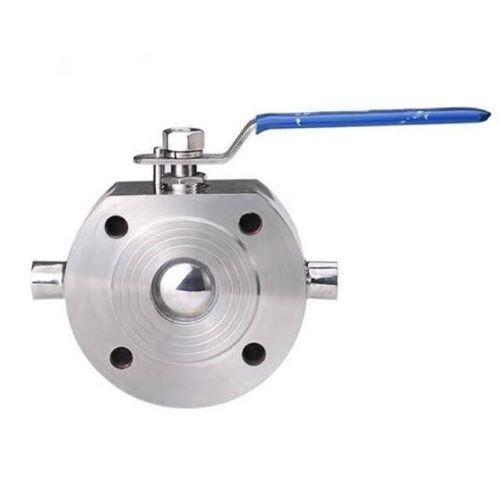
Export Quality Wafer Ball Valves
Price 1600.0 INR / Number
Minimum Order Quantity : 1 Number
Finish : Epoxy coated / Mirror finish
Structure : Other, Wafer Type Two Piece Design
Application : Industrial / Automotive / Utility Pipes
Material : Other, Stainless Steel / Cast Iron / Carbon Steel
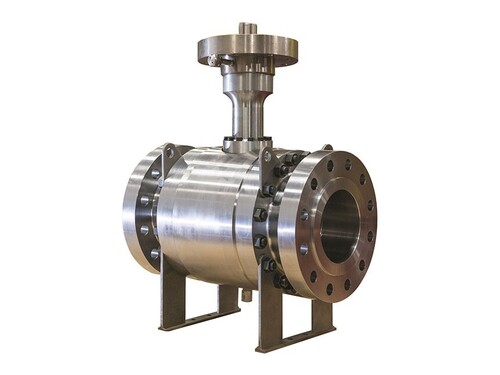
Metal Seated Ball Valves
Price 2000 INR / Unit
Minimum Order Quantity : 1 Number
Finish : Anticorrosive Coating / Shot Blasted / Painted
Structure : Other, Floating Ball / Trunnion Mounted
Application : Chemical, Petrochemical, Power, Oil & Gas, Refinery, Pulp & Paper, Mining, Sugar, Steel Plants
Material : Other, Stainless Steel / Alloy Steel / Cast Iron / Carbon Steel (WCB, LCB, WC6, WC9, CF8, CF8M) / Duplex Steel
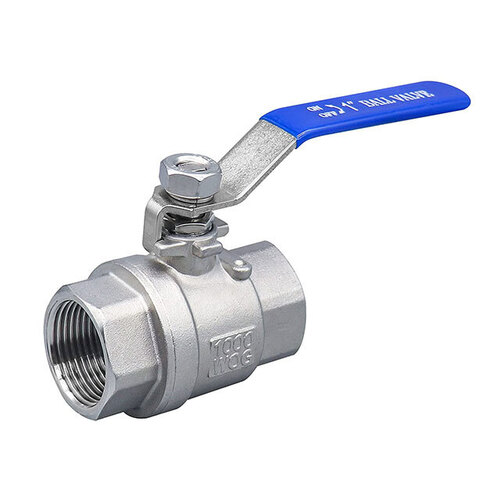
Precision Ball Valve
Price 600.0 INR / Unit
Minimum Order Quantity : 1 Unit
Finish : Polished
Structure : Ball
Application : Industrial, Agriculture, Water Treatment
Material : Stainless Steel
Industrial Single Piece Ball Valve
Price 700.0 INR / Unit
Minimum Order Quantity : 1 Number
Finish : Polished
Structure : Other, Single Piece
Application : Chemical, Water Treatment, Oil & Gas
Material : Other, Stainless Steel / Carbon Steel / Cast Iron / Alloy Steel

 Send Inquiry
Our Products
- Needle Valve
- Ball Valve
- Globe Valve
- Gate Valve
- Y Type Strainer
- Piston Valve
- Check Valve
- Sight Glass
- Butterfly Valve
- Swing Check Valve
- Damper Valve
- Basket Strainer
- Pressure Reducing Valve
- Double Block Bleed Valve
- Moisture Separator
- Forged Valve
- Diaphragm Valve
- Mini Ball Valve
- Forbes Marshall PRV
- T Type Strainer
- Plug Valve
- Blow Down Valve
- Air Valve
- Non Return Valve
- Safety Valve
- Steam Trap
- Gasket
- L&T Ball Valve
- L&T Butterfly Valve
- AUDCO Ball Valve
- SPIRAX Marshall PRV
- Solenoid Valve
- oxygen
- roto seal coupling
- straight union
- flow control
- ptfe sheets
- ptfe
- rubber products
- felt products
- Asbestos products
- Engineered plastics products
- rubber seals
- rubber gasket
- Sight Glasses
- Jacketed Valves
- flush bottom valve
- strainer
- Sluice Gate Valve
- Slab Gate Valve
- PTFE Lined Valve
- PTFE Lined Valves


416,417 4th Floor, A Block Safal 8, Ajit Mill, Cross Rd, Rakhial,Ahmedabad - 380023, Gujarat, India

Mr Shakir Ansari
(Director)
Mobile :08071780343
 Send Inquiry
 Send SMS
 Call Me Free
Developed and Managed by Infocom Network Private Limited.
