
Call us now :08071793447
 Send Inquiry
 Send Inquiry
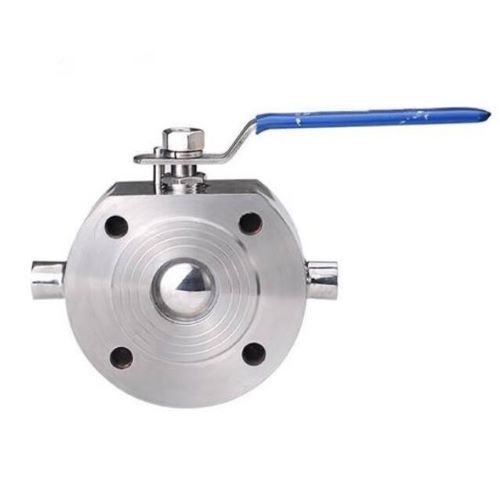
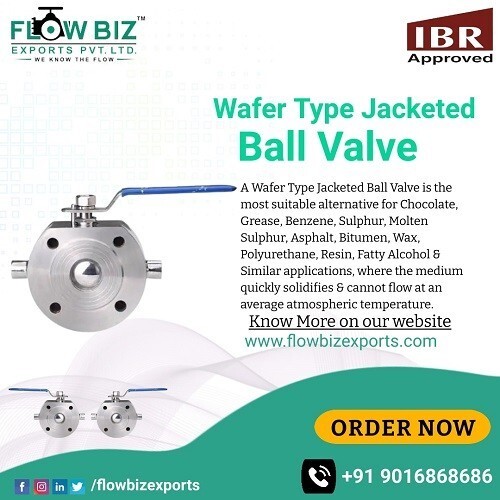
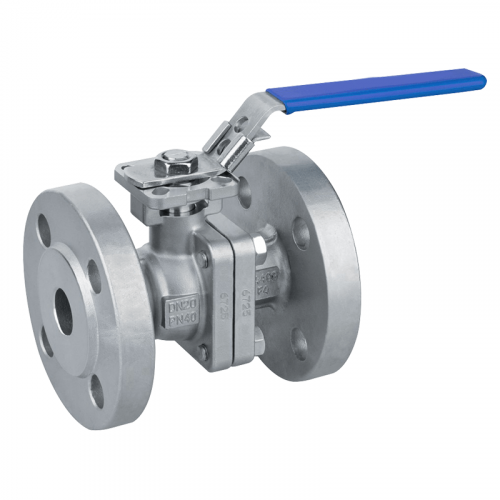
Best Wafer Type Jacketed Ball Valve
Price 800.0 INR/ Number
MOQ : 1 Number
Best Wafer Type Jacketed Ball Valve Specification
- Pressure
- 10 Bar to 40 Bar
- Channels
- Single / Double
- Caliber
- Standard and Custom
- Structure
- Wafer Type Jacketed Ball Valve
- Connection
- Wafer / Flanged
- Material
- Stainless Steel / Carbon Steel
- Power
- Manual / Electric / Pneumatic
- Media
- Oil, Water, Gas, Chemical
- Temperature of Media
- -20°C to 180°C
- Port Size
- 25mm to 300mm
- Flange
- ANSI, DIN, JIS Flange Compatible
- Finish
- Epoxy Coated / Polished
- Application
- Chemical, Pharmaceutical, Food & Beverage, Petrochemical
- Size Range
- DN25 to DN300
- Testing Standard
- API 598
- Ball Material
- SS304, SS316
- Operation Mode
- Lever / Gear / Actuator
- Leakage Rate
- Class VI
- Mounting Type
- ISO 5211
- Surface Protection
- Corrosion Resistant Coating
- Design Standard
- ASME B16.34
- End Connection
- Wafer style between flanges
- Anti-static Feature
- Provided
- Seat Material
- PTFE / RPTFE / Metal
- Jacket Type
- Full Jacket / Partial Jacket
- Fire Safe Design
- Available
- Flow Characteristic
- Full Bore
About Best Wafer Type Jacketed Ball Valve
What is a Jacketed Ball Valve and What is it Used For?
A jacketed ball valve is a highly specialized industrial valve engineered explicitly for process lines where the flowing medium is highly temperature-sensitive. Unlike standard valves, a jacketed valve features an integrated secondary outer metallic shroud (the "jacket") welded or cast directly onto the valve body.
The primary use of a jacketed ball valve is to regulate, preserve, or maintain the temperature of the internal process fluid. By circulating a thermal mediasuch as high-pressure steam, hot oil, hot water, or chilled glycolthrough the jacket cavity, the valve provides continuous thermal energy transfer directly to the valve walls. This keeps the internal media at a constant, uniform temperature as it transitions through the valve port.
Technical Specifications & Manufacturing Standards
| Parameter | Engineering Specification Details |
| Size Range | DN25 to DN300 (1" inch to 12" inches) |
| Pressure Spectrum | 10 Bar to 40 Bar (Compatible with ANSI Class 150 / 300) |
| Design Compliance | Engineered in strict accordance with ASME B16.34 |
| Testing Standards | 100% hydrostatic, pneumatic, and shell verified per API 598 |
| Flange Integration | Fits seamlessly between ANSI, DIN, or JIS companion flanges |
| Automation Pad | Integrated ISO 5211 top-mounting pad for seamless actuation |
| Sealing Threshold | ANSI/FCI 70-2 Leakage Class VI (Bubble-tight shutoff) |
Critical Applications: Why and Where is it Used?
1. Preventing Media Solidification & Crystallization
The most vital application of a jacketed ball valve is managing highly viscous process media that naturally solidifies, crystallizes, or hardens at ambient atmospheric temperatures. If the temperature drops even slightly, these materials stick to the internal ball, clog the pipeline, and completely seize the valve mechanism.
Jaceted valves are the industry standard for transporting:
-
Petrochemicals & Refining: Asphalt, bitumen, heavy crude oil, wax, benzene, and molten sulfur.
-
Chemicals & Polymers: Polyurethane, resins, fatty alcohols, and industrial adhesives.
-
Food & Beverage Processing: Liquid chocolate, glucose, syrups, shortenings, and fats.
2. Viscosity Control for Pumping Efficiency
Many fluids do not solidify completely but become extremely thick and sluggish when cold. By applying continuous heat via the valve jacket, the fluid's viscosity is kept consistently low. This ensures smooth volumetric flow, eliminates internal pressure drops, and prevents pump cavitation or motor overload.
Key Design Configurations: Full vs. Partial Jackets
FlowBiz Exports Pvt. Ltd. manufactures jacketed ball valves in two primary architectural layouts depending on your thermal control budget and strictness:
Full Jacketed Design
The outer jacket extends completely from one flange face to the other, enveloping the entire valve body and end connections. This provides the most uniform thermal distribution possible and eliminates cold spots. It is highly recommended for critical fluids like molten sulfur or chocolate, where even a minor temperature drop causes instant crystallization.
Partial Jacketed Design
The thermal jacket covers only the central body capsule containing the ball and seats, leaving the outer flange bolt circles exposed. This design is highly cost-effective and lighter in weight, perfectly suited for fluids requiring moderate temperature maintenance where slight heat dissipation at the pipe joints is permissible.
Major Advantages of FlowBiz Wafer Jacketed Ball Valves
Ultra-Compact Wafer Architecture
Traditional jacketed valves are incredibly bulky because the outer jacket extends over massive body flanges. The FlowBiz Wafer Type Jacketed Ball Valve resolves this layout challenge. Its space-saving design features a dramatically shortened face-to-face distance, allowing the jacketed unit to slide effortlessly between standard pipe flanges. This reduces raw material costs, drops overall pipeline weight, and minimizes fluid retention zones inside the valve.
Advanced Plant Safety Features
-
Fire-Safe Certified: Outfitted with emergency metal-to-metal backup seals that activate if fire damages the primary soft seats.
-
Anti-Static Elements: Built-in grounding devices eliminate static charge buildup caused by friction from moving viscous liquids.
-
ISO 5211 Actuation Pad: Supports easy, direct connection to manual levers, gear operators, pneumatic cylinders, or electric automated control loops.
Frequently Asked Questions (FAQs)
Q: What thermal media can be safely circulated inside the valve jacket?
A: The jacket is completely isolated from the internal process fluid to avoid cross-contamination. Depending on your process thermal requirements, you can circulate saturated steam, hot thermal oil, or hot water for heating preservation, or chilled water/glycol mixtures if your process media must be preserved under cold conditions.
Q: Why are ASME B16.34 and API 598 standards vital for jacketed valves?
A: Because jacketed valves handle high-temperature fluids on the inside and pressurized thermal utilities (like steam) on the outside, structural integrity is paramount. ASME B16.34 dictates strict wall thickness and pressure-temperature thresholds, while API 598 mandates strict testing to ensure zero structural leakage between the internal process line and the outer thermal jacket.
Q: Why choose FlowBiz as your preferred jacketed valve manufacturer in Kheda and across India?
A: FlowBiz Exports Pvt. Ltd. specializes in precision-casting premium body metallurgies (such as WCB carbon steel and CF8M stainless steel) paired with specialized high-temperature coatings. Whether you need a bespoke size variant from DN25 to DN300 or specific automated actuation for a complex refinery loop, our engineering facility in Kheda delivers certified, international-grade thermal control solutions engineered for continuous operational longevity.
Tell us about your requirement

Price:
Quantity
Select Unit
- 50
- 100
- 200
- 250
- 500
- 1000+
Additional detail
Mobile number
Email

More Products in Ball Valve Category
Heavy Duty Wafer Type Ball Valve Manufacturer in Gandhidham
Price 1500.0 INR / Number
Minimum Order Quantity : 1 Number
Finish : Electro Polished / Painted
Application : Chemical, Petrochemical, Power Plant, Water Treatment, Oil & Gas
Media : Other, Water, Gas, Oil, Steam
Material : Other, Stainless Steel, Carbon Steel, Alloy Steel
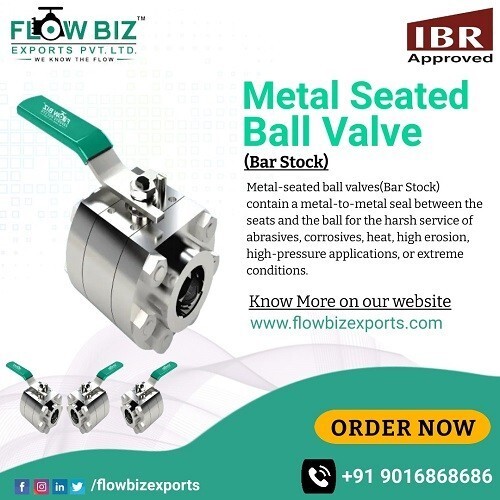
Zero Leakage Metal Seated Ball Valve Manufacturer in Gandhidham
Price 2500.0 INR / Unit
Minimum Order Quantity : 1 Piece
Finish : Polished / Painted
Application : Industrial, Chemical, Refineries, Petrochemical
Media : Other, Water, Oil, Gas, Steam, Corrosive Media
Material : Other, Metal (A105 / SS304 / SS316 / WCB)
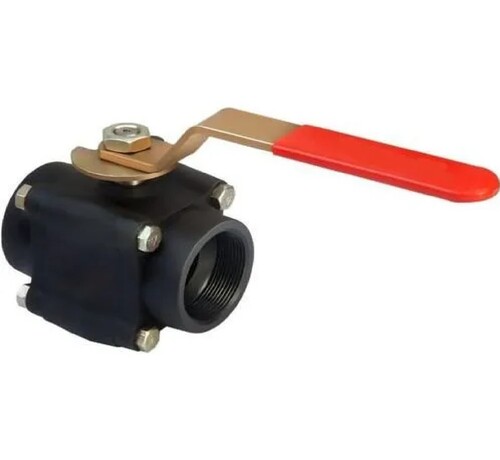
Actuated Forged Steel Ball Valve
Price 2000.0 INR / Number
Minimum Order Quantity : 1 Number
Finish : Corrosion Resistant Coating
Application : Industrial, Oil & Gas, Petrochemical
Media : Other, Water, Oil, Gas
Material : Other, Forged Steel
Industrial Single Piece Valve Ball
Price 500.0 INR / Piece
Minimum Order Quantity : 1 Piece
Finish : Polished & Coated
Application : Industrial Flow Control
Media : Water
Material : Stainless Steel

 Send Inquiry
Our Products
- Needle Valve
- Ball Valve
- Globe Valve
- Gate Valve
- Y Type Strainer
- Piston Valve
- Check Valve
- Sight Glass
- Butterfly Valve
- Swing Check Valve
- Damper Valve
- Basket Strainer
- Pressure Reducing Valve
- Double Block Bleed Valve
- Moisture Separator
- Forged Valve
- Diaphragm Valve
- Mini Ball Valve
- Forbes Marshall PRV
- T Type Strainer
- Plug Valve
- Blow Down Valve
- Air Valve
- Non Return Valve
- Safety Valve
- Steam Trap
- Gasket
- L&T Ball Valve
- L&T Butterfly Valve
- AUDCO Ball Valve
- SPIRAX Marshall PRV
- Solenoid Valve
- oxygen
- roto seal coupling
- straight union
- flow control
- ptfe sheets
- ptfe
- rubber products
- felt products
- Asbestos products
- Engineered plastics products
- rubber seals
- rubber gasket
- Sight Glasses
- Jacketed Valves
- flush bottom valve
- strainer
- Sluice Gate Valve
- Slab Gate Valve
- PTFE Lined Valve
- PTFE Lined Valves


416,417 4th Floor, A Block Safal 8, Ajit Mill, Cross Rd, Rakhial,Ahmedabad - 380023, Gujarat, India

Mr Shakir Ansari
(Director)
Mobile :08071793447
 Send Inquiry
 Send SMS
Developed and Managed by Infocom Network Private Limited.
