
Call us now :08071780343
 Send Inquiry
 Send Inquiry
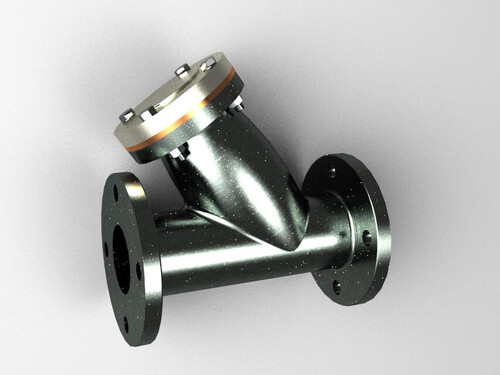
Strainer Valve
Price 2000.0 INR/ Number
MOQ : 1 Number
Strainer Valve Specification
- Application
- Process Industries like-Chemical, Power, Refinery, Petrochemicals, Nuclear, Water
- Type
- Manual
- Media
- Water
- Port Size
- Customized as per requirement
- Temperature
- Up to 200°C Celsius (oC)
- Disc
- SS 304
Strainer Valve About
Industrial Pipeline Strainers: Core Working Principles and Engineering Dynamics
In industrial process piping, fluid transmission lines must remain completely clear of suspended solids, pipe scale, sediment, and foreign debris. If unmanaged, these contaminants travel downstream at high velocities, causing severe mechanical issues: scratching the tight seats of control valves, eroding pump impellers, plugging spray nozzles, and clouding analytical monitoring instruments.
An industrial Pipeline Strainer serves as a vital mechanical protection device. It intercepts and removes suspended solids from fluid streams via a physical, perforated or woven mesh barrier. Positioned upstream of sensitive, high-value equipment, a strainer maintains fluid purity, reduces system downtime, and protects rotating machinery from mechanical damage.
Detailed Working Principle of a Pipeline Strainer
The core functional mechanics of a pipeline strainer remain consistent across different geometric profileswhether utilizing a Y-type, T-type, Simplex basket, or Duplex basket layout.
The Progressive Filtration Cycle [ Inlet Segment ] [ Internal Mesh Barrier ] [ Outlet Segment ] (Fluid + Debris) (Particulates Trapped) (Clean Fluid Out) [ Pressure Drop Increases ] [ Differential Pressure Alert ] [ Screen Flush / Maintenance ] Step 1: Fluid Entry through the Suction Segment
The process fluid (liquid, gas, or steam) enters the strainer housing through the high-pressure Inlet Section on the Suction Side of the pipeline. The inner flow tracks guide the incoming fluid directly into the interior chamber of the cleanable filter element or basket.
Step 2: Physical Separation & Media Retention
As the fluid passes through the openings of the perforated sheet or wire mesh screen, the solid particulates are physically blocked. While the cleaned fluid flows out freely, foreign contaminantssuch as loose welding slag, plastic burrs, seaweed, scale, and stonesare trapped inside the basket.
Step 3: Differential Pressure (P) Development
As trapped debris gradually accumulates along the screen face, it reduces the available open area for fluid transit. This restriction causes an increase in resistance, creating a pressure drop (P) between the inlet (suction side) and outlet (discharge side).
In automated networks, differential pressure sensors monitor this variance. Once the pressure drop reaches a pre-set limit, the sensor triggers a system alarm to notify plant operators that the filter screen is heavily loaded and requires cleaning.
Step 4: System Diversion or Blowdown Maintenance
Depending on the facility's piping configuration, maintenance teams can restore efficient flow through two primary methods:
-
Simplex Configurations: The pipeline flow is temporarily shut down, the strainer chamber is isolated and vented, and the filter basket is manually removed, cleaned, and replaced.
-
Duplex Configurations: An integrated diverter valve redirects the fluid flow to a secondary, parallel filter basket chamber. This setup allows maintenance teams to clean the dirty basket without stopping production, ensuring continuous operation.
Technical Specifications & Performance Parameters
Strainer valves produced by industrial manufacturers are engineered to withstand severe process pressures and thermal spikes.
Core Engineering Parameter Matrix
| Parameter Profile | Technical Specifications & Performance Limits |
| Primary Structural Core | Precision-machined SS 304 Stainless Steel internal elements |
| Thermal Operating Envelope | High-integrity structural safety at temperatures up to 200C |
| Customization Framework | Fully customizable port sizes tailored to match plant layouts |
| Compatible Fluid Mediums | Primary focus on raw water, chemical feeds, oils, and gases |
| Manufacturing Hub Location | Bhavnagar, Gujarat, India (Supporting domestic and export supply lines) |
Comparative Matrix: Primary Strainer Geometries
| Strainer Typology | Preferred Structural Orientation | Primary Operational Advantage | Typical Industrial Application |
| Y-Type Strainer | Horizontal or Vertical (Downward Flow) | Compact mechanical design; handles high pressures and thermal cycles well. | High-pressure steam lines, gases, and low-viscosity liquid headers. |
| Basket (Simplex) | Horizontal Only | Large internal holding volume; lower initial pressure drops (P). |
High-volume cooling water runs and liquid chemical feed headers. |
| Duplex Strainer | Horizontal Only | Provides uninterrupted, continuous filtration during basket cleaning cycles. | Continuous-process refinery lines, fuel oil loops, and lubricating manifolds. |
Strategic System & Industrial Applications
High-temperature, standard-compliant strainer valves provide essential equipment protection across heavy industrial manufacturing zones:
-
Chemical Processing & Refineries: Intercepting particulate impurities inside raw chemical feeds and aggressive solvent lines up to 200C.
-
Power Generation & Boiler Utilities: Positioned ahead of high-pressure boiler feed pumps and cooling loop manifolds to prevent turbine scale damage.
-
Petrochemical & Nuclear Plants: Providing high-integrity water filtration inside critical auxiliary loops where process safety is paramount.
-
Water Treatment & Desalination Facilities: Catching coarse debris and suspended organic matter in intake pipelines before fluids reach fine filtration membranes.
Frequently Asked Questions (FAQ)
Q: How do Bhavnagar manufacturers customize strainer valves for specific facility skids?
A: Sourcing and project engineering teams can establish customized fabrication profiles during the ordering phase. FlowBiz and local manufacturers provide fully customizable port sizes and unique face-to-face dimensions. This ensures that the strainer matches your existing pipeline dimensions or international standards perfectly, eliminating the need for expensive modifications or piping adapters.
Q: Why is high-grade SS 304 stainless steel preferred for the internal disc and basket components?
A: Industrial process fluids, especially high-temperature water loops and chemical feeds, can cause rapid oxidation and pitting in standard carbon steel components. SS 304 stainless steel features a dense chromium-nickel matrix that naturally forms a passive, protective surface layer. This core provides high mechanical strength, resists chemical erosion, and maintains structural integrity during continuous manual operation up to 200C.
Q: What is the exact process for maintaining a manual strainer valve safely?
A: Maintaining a manual strainer involves a straightforward, sequential procedure:
-
Line Isolation: Completely close the upstream and downstream isolation valves to isolate the strainer chamber.
-
Pressure Venting: Safely open the bleed valve or drain plug to vent all internal pressure and drain any remaining fluid.
-
Screen Cleaning: Loosen the bonnet fasteners, remove the SS 304 mesh basket, wash out the trapped debris, and inspect the screen for damage.
-
Reassembly: Reinsert the clean basket, replace the body gasket to maintain a leak-proof seal, and tighten the bonnet bolts evenly before restarting flow.
Q: How does integrating a pipeline strainer improve the overall economic efficiency of a process plant?
A: While installing high-integrity strainers requires an initial capital investment, it delivers substantial long-term savings by reducing overall operating costs. By intercepting abrasive debris early, strainers prevent seat scratching in expensive control valves, stop pump impellers from locking up, and shield analytical sensors from fouling. This proactive protection shortens equipment turnaround times, lowers maintenance costs, and extends the service life of downstream assets.
Tell us about your requirement

Price:
Quantity
Select Unit
- 50
- 100
- 200
- 250
- 500
- 1000+
Additional detail
Mobile number
Email

More Products in strainer Category
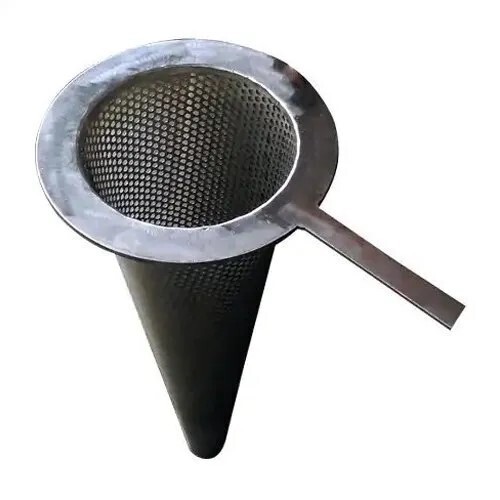
High Pressure Cone Strainer
Price 2500.0 INR / Number
Minimum Order Quantity : 1 Number
Material : Stainless Steel SS304, SS316, Carbon Steel
Features : Easy cleaning, high durability, corrosion resistant
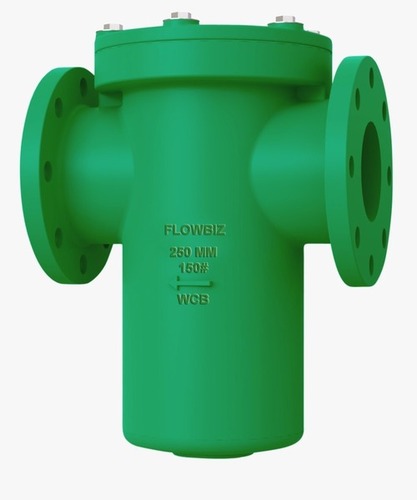
Pipeline Basket Type Strainer
Price 600.0 INR / Number
Minimum Order Quantity : 1 Number
Material : MS
Color : Green
Features : Good Quality
Usage : Industrial
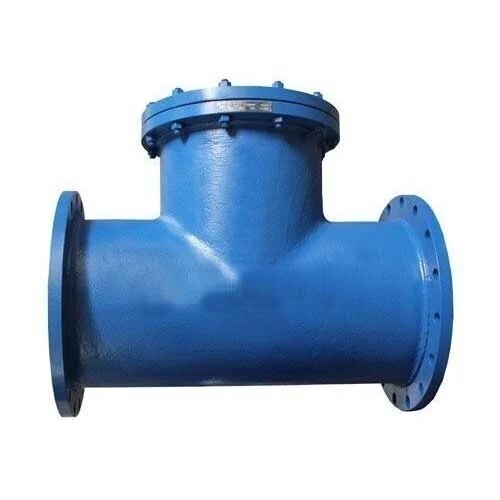
Stainless Steel T Strainer
Price 3000.0 INR / Number
Minimum Order Quantity : 1 Number
Material : MS
Color : Blue
Features : Good Quality
Usage : Industrial
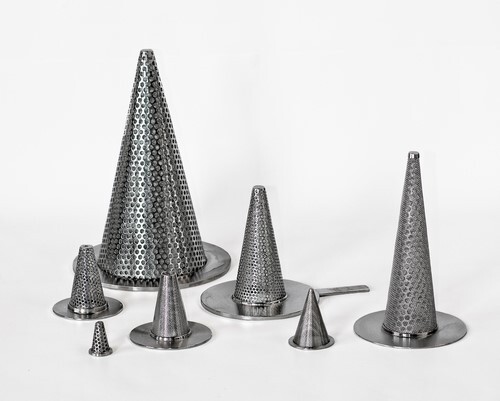
Conical Type Strainer
Price 2000.0 INR / Number
Minimum Order Quantity : 1 Number
Material : MS
Color : Silver
Features : Good Quality
Usage : Industrial

 Send Inquiry
Our Products
- Needle Valve
- Ball Valve
- Globe Valve
- Gate Valve
- Y Type Strainer
- Piston Valve
- Check Valve
- Sight Glass
- Butterfly Valve
- Swing Check Valve
- Damper Valve
- Basket Strainer
- Pressure Reducing Valve
- Double Block Bleed Valve
- Moisture Separator
- Forged Valve
- Diaphragm Valve
- Mini Ball Valve
- Forbes Marshall PRV
- T Type Strainer
- Plug Valve
- Blow Down Valve
- Air Valve
- Non Return Valve
- Safety Valve
- Steam Trap
- Gasket
- L&T Ball Valve
- L&T Butterfly Valve
- AUDCO Ball Valve
- SPIRAX Marshall PRV
- Solenoid Valve
- oxygen
- roto seal coupling
- straight union
- flow control
- ptfe sheets
- ptfe
- rubber products
- felt products
- Asbestos products
- Engineered plastics products
- rubber seals
- rubber gasket
- Sight Glasses
- Jacketed Valves
- flush bottom valve
- strainer
- Sluice Gate Valve
- Slab Gate Valve
- PTFE Lined Valve
- PTFE Lined Valves


416,417 4th Floor, A Block Safal 8, Ajit Mill, Cross Rd, Rakhial,Ahmedabad - 380023, Gujarat, India

Mr Shakir Ansari
(Director)
Mobile :08071780343
 Send Inquiry
 Send SMS
 Call Me Free
Developed and Managed by Infocom Network Private Limited.
