
Call us now :08071793447
 Send Inquiry
 Send Inquiry
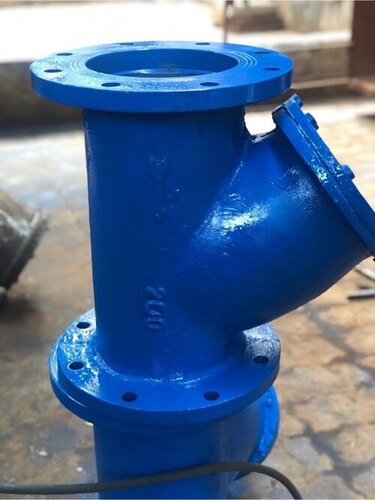
Strainer Manufacturer in Navsari, Gujarat | Industrial Strainer Supplier India
Price 2000.0 INR/ Number
MOQ : 1 Number
Strainer Manufacturer in Navsari, Gujarat | Industrial Strainer Supplier India Specification
- Valve Size
- 1/2 to 24
- Features
- Corrosion Resistant, Easy Maintenance, Durable Construction, High Filtration Efficiency
- Valve Type
- Strainer
- Control System
- Manual
- Material
- Stainless Steel, Cast Iron, Carbon Steel, Bronze
- Connection Type
- Flanged, Screwed Ends, Socket Weld
- Sealing
- Gasket, O-Ring
- Application
- Water, Oil, Gas, Steam filtration
- Structure
- Y-Type / Basket / T-Strainer
- Type
- Industrial Strainer
- Pressure
- Upto 40 Bar
- Media
- Liquid, Gas, Steam
- Port Size
- 15 mm to 600 mm
- Temperature
- Upto 400C (Depending on Material)
- Disc
- Perforated or Mesh
- Screen Material
- Stainless Steel 304/316, Brass
- Maintenance
- Tool-Free Cleaning Access
- Installation Position
- Horizontal / Vertical
- Coating
- Epoxy / Powder Coated
- Standard
- ANSI, DIN, BS
- End Connection
- Threaded / Flanged / Welded
- Testing
- Hydrostatic Pressure Tested
- Max Flow Rate
- Varies with Size and Model
- Mesh Size
- Customized as per requirement
About Strainer Manufacturer in Navsari, Gujarat | Industrial Strainer Supplier India
Industrial Pipeline Strainers: Functional Dynamics, Component Engineering, and Design Standards
In any industrial manufacturing facility, chemical refinery, or power generation plant, the fluid pipeline network acts as the primary circulatory system. Whether carrying process water, hydrocarbons, steam, or gases, these fluids frequently contain foreign suspended solids, welding slag, pipe scale, rust, and debris. If these contaminants are left unmanaged, they travel downstream at high velocities, causing severe damage to high-value infrastructure: scratching control valve seats, eroding pump impellers, plugging spray nozzles, and fouling heat exchanger tubes.
An industrial Pipeline Strainer is a rigid closed-pressure vessel housing a cleanable, renewable screen element designed to physically intercept and remove these solid contaminants from fluid streams. By acting as a mechanical protective barrier, a strainer purifies the fluid medium, safeguards downstream equipment from abrasive wear, minimizes unexpected facility downtime, and maintains stable process efficiency.
                    The Direct Pipeline Filtration Cycle


 [ Inlet Segment ]  [ Internal Mesh Barrier ]  [ Outlet Segment ]
 (Fluid + Solids)        (Traps Foreign Debris)        (Clean Medium Out)


                     [ Debris Volume Increases ]

                     [ Resistance / Pressure Drop (P) ]


                     [ Quick-Opening Maintenance ]
                     (Tool-Free Screen Flush)
We are an elite global fluid-handling brand and a leading Strainer Manufacturer in Navsari, Gujarat, India. We focus on precision engineering high-durability, code-compliant pipeline strainers. Our equipment balances low structural resistance with excellent particle collection capacity to protect industrial infrastructure worldwide.
Technical Specifications & Compliance Parameters
Our industrial pipeline strainers are cast, forged, and hydrostatically tested to comply with strict global engineering standards, ensuring reliable pressure containment.
Core Engineering Product Matrix
| Parameter Profile | Technical Specifications & Design Limits |
| Design Compliance Codes | Engineered to satisfy global ANSI, DIN, and BS standards |
| Supported Fluid Portfolios | Industrial Water, Hydrocarbons, Natural Gas, and Utility Steam |
| Internal Screen Options | Heavy Perforated Plates or Fine Woven Wire Mesh Screens |
| Screen Material Selection | Premium SS 304 Stainless Steel, SS 316, or Brass |
| Housing Coating Matrices | High-Adhesion Epoxy or Durable Powder Coating |
| Pressure Sealing Elements | Severe-Service Elastomeric Gaskets or High-Density O-Rings |
| End Connection Interfaces | High-Integrity Flanged, Screwed (Threaded), or Socket Weld Ends |
| Installation Layout Options | Highly versatile configuration for Horizontal or Vertical pipelines |
| Quality Verification Sweep | 100% Hydrostatically pressure tested for structural integrity |
Critical Engineering Features & Process Benefits
1. High Filtration Efficiency via Tailored Screens
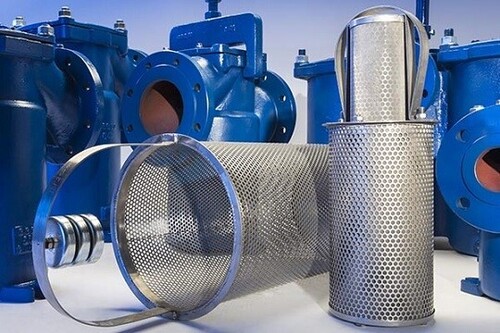
The core component of every pipeline strainer is its internal separation screen, available in either heavy perforated plate sheets or fine woven wire mesh.
Perforated Screens: Formed from stamped metal sheets, these act as an excellent primary barrier designed to capture coarse debris like stones and welding rods.
Mesh Screens: Constructed by weaving fine alloy wires over a supportive perforated basket, these provide fine particle removal. This configuration protects delicate instrumentation and tight control valve apertures from micro-particulates.
2. Streamlined Maintenance & Tool-Free Access
A key operational advantage of our strainers is their easy maintenance workflow. Traditional filters often require extensive downtime and specialized mechanical tools to service. Our advanced housings are designed with quick-opening bonnet options that provide tool-free cleaning access. This design allows field operators to open the chamber, lift out the loaded screen basket, rinse it clean, and replace it quickly, minimizing facility downtime and labor costs.
3. Leak-Free Operation & Corrosion Resistance
To ensure long-term pressure containment during critical processes, our strainers use robust sealing options like heavy-duty gaskets or elastic O-rings, which provide leak-free operation. To resist chemical erosion and weather wear, the raw cast housings are treated with industrial epoxy or powder coatings. This treatment shields the underlying metal from aggressive process environments and atmospheric corrosion, ensuring a long service life.
                        Pipeline Fitting Options


                  End Connection Layout Selection


 [ Flanged / Welded Connections ]   [ Socket Weld Ends ]       [ Threaded / Screwed Ends ]
 (High-Pressure / Zero-Leak Lines)  (Compact Piping Runs)      (Low-Pressure Utility Skids)
Strategic System & Industrial Applications
Our certified, high-efficiency pipeline strainers provide critical system protection across severe-service sectors:
-
Chemical Processing & Industrial Facilities: Catching particulate impurities inside raw chemical feeds, aggressive liquids, and blending loops.
-
Petroleum Refineries & Petrochemical Units: Positioned along hydrocarbon manifolds, cooling towers, and fuel transfer headers to capture pipe scale.
-
Power Generation & Boiler Utilities: Protecting high-volume boiler feed pumps, steam headers, and condenser circuits from thermal scale.
-
Water Treatment & Desalination Facilities: Intercepting sand, silt, and organic debris ahead of high-pressure pumps and fine reverse-osmosis filtration banks.
-
HVAC Chiller Plant Loops: Filtering cooling tower basin lines to keep particulates from fouling narrow heat exchanger tubes.
Pan-India Supply Capabilities & Logistics Footprint
Operating advanced production, distribution, and custom fabrication hubs in Navsari, Gujarat, we manage rapid dispatch, technical engineering consultation, and comprehensive field care across all major industrial manufacturing zones, chemical corridors, and shipping hubs in India:
-
Gujarat Logistics: Navsari, Rajkot, Ahmedabad, Vapi, Valsad, Surat, Gandhidham, Kutch, Ankleshwar, Bharuch.
-
Maharashtra Corridors: Mumbai, Nashik, Pune, Thane, Aurangabad, Satara, Sangli, Nagpur, Kolhapur.
-
Central & Southern India Hubs: Indore, Dewas, Bhopal, Chennai, Coimbatore, Salem, and international export trade loops.
Frequently Asked Questions (FAQ)
Q: How should an engineer choose the correct end connection interface for a pipeline strainer?
A: The selection depends on your system's operating pressure, temperature limits, and maintenance layout:
-
Flanged and Welded Connections: Preferred for high-pressure, high-temperature lines because they provide high structural strength and a reliable, leak-proof seal under piping stress.
-
Threaded (Screwed) Ends: Best suited for smaller, low-pressure pipeline runs or compact utility skids where the strainer needs to be easily removed for servicing without adding weight.
-
Socket Weld Ends: Provide a permanent, zero-leak joint in high-pressure lines where frequent removal of the entire valve body is not required.
Q: Why is it critical to customize the mesh size for a specific industrial process?
A: Customized mesh sizing allows you to optimize filtration efficiency for your specific application. If the mesh openings are too large, micro-particulates can pass through and score downstream control instrumentation. If the openings are too small, the screen will accumulate debris too quickly, causing a sharp rise in pressure drop (P) and starving downstream pumps. Customizing the screen ensures the perfect balance: catching harmful particles while maintaining a clean, continuous flow profile.
Q: What indicators show that an inline strainer screen needs to be cleaned?
A: Maintenance teams should monitor the differential pressure gauges (P) installed across the strainer housing. A measurable increase in pressure drop indicates that trapped debris has partially blinded the screen face, restricting fluid flow. Thanks to the housing's quick-opening bonnet design, operators can perform routine cleaning quickly using tool-free cleaning access. This allows them to flush or brush out the screen basket and restore full system flow with minimal effort.
Q: Can these strainers be safely installed in vertical pipelines?
A: Yes. Our strainers are engineered for flexible installation in both horizontal and vertical positions within a pipeline network. When installing a strainer vertically, engineers must ensure the fluid flows downward. This orientation uses gravity to pull trapped solids down into the collection basket or basin, preventing the debris from falling back into the upstream line when the process flow stops.
Tell us about your requirement

Price:
Quantity
Select Unit
- 50
- 100
- 200
- 250
- 500
- 1000+
Additional detail
Mobile number
Email

More Products in strainer Category
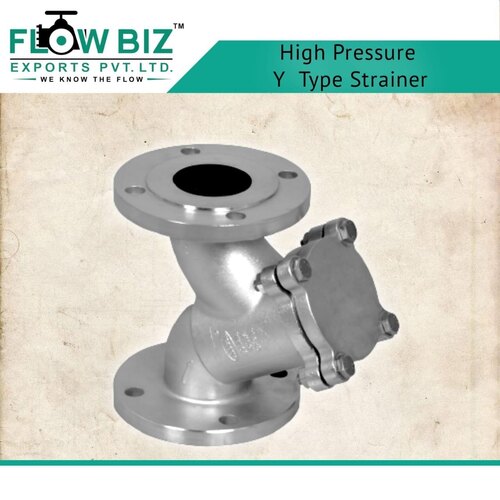
Strainer Manufacturer in Amreli
Price 3000 INR / Unit
Minimum Order Quantity : 1 Number
Material : Cast Iron, Carbon Steel, Stainless Steel, Bronze, Gunmetal
Features : Corrosion Resistant, Easy Maintenance, Fine Filtration, Rugged Construction
Temperature : Upto 220C (Depending on Material)
Port Size : 15mm to 300mm
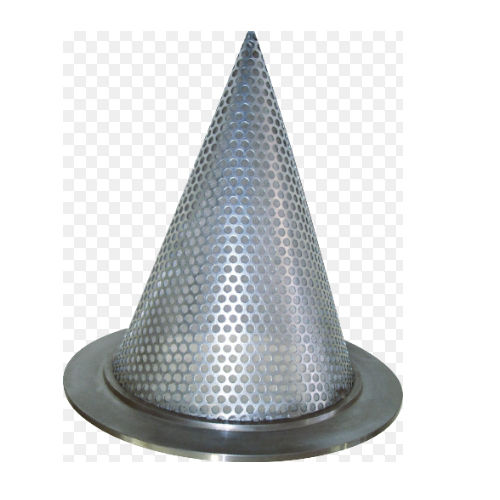
Conical Type Strainer Manufacturer In Gandhinagar
Price 600 INR / Unit
Minimum Order Quantity : 1 Number
Material : Stainless Steel, Carbon Steel, Brass, Bronze, Alloy Steel
Features : Removable Element, High Filtration Area, Easy Cleaning, Corrosion Resistance
Temperature : Up to 220C
Port Size : As Per Requirement (Usually 15mm to 600mm)
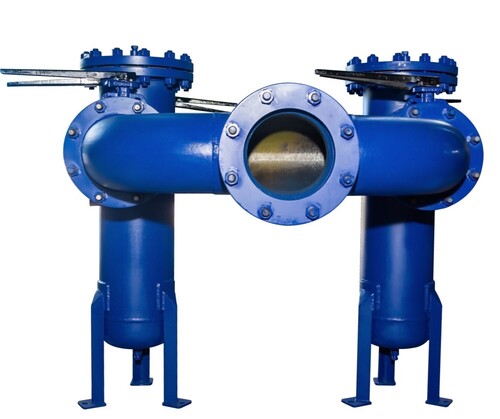
Duplex Type Strainer Manufacturer in India
Price 2000 INR / Unit
Minimum Order Quantity : 1 Number
Material : Cast Iron/Carbon Steel/Stainless Steel
Features : Duplex design allows continuous operation during maintenance
Temperature : Up to 200C Celsius (oC)
Port Size : Varies as per requirement
Industrial Strainer
Price 3000.0 INR / Unit
Minimum Order Quantity : 1 Unit
Material : SS
Features : Good Quality

 Send Inquiry
Our Products
- Needle Valve
- Ball Valve
- Globe Valve
- Gate Valve
- Y Type Strainer
- Piston Valve
- Check Valve
- Sight Glass
- Butterfly Valve
- Swing Check Valve
- Damper Valve
- Basket Strainer
- Pressure Reducing Valve
- Double Block Bleed Valve
- Moisture Separator
- Forged Valve
- Diaphragm Valve
- Mini Ball Valve
- Forbes Marshall PRV
- T Type Strainer
- Plug Valve
- Blow Down Valve
- Air Valve
- Non Return Valve
- Safety Valve
- Steam Trap
- Gasket
- L&T Ball Valve
- L&T Butterfly Valve
- AUDCO Ball Valve
- SPIRAX Marshall PRV
- Solenoid Valve
- oxygen
- roto seal coupling
- straight union
- flow control
- ptfe sheets
- ptfe
- rubber products
- felt products
- Asbestos products
- Engineered plastics products
- rubber seals
- rubber gasket
- Sight Glasses
- Jacketed Valves
- flush bottom valve
- strainer
- Sluice Gate Valve
- Slab Gate Valve
- PTFE Lined Valve
- PTFE Lined Valves


416,417 4th Floor, A Block Safal 8, Ajit Mill, Cross Rd, Rakhial,Ahmedabad - 380023, Gujarat, India

Mr Shakir Ansari
(Director)
Mobile :08071793447
 Send Inquiry
 Send SMS
 Call Me Free
Developed and Managed by Infocom Network Private Limited.
