
Call us now :08071793447
 Send Inquiry
 Send Inquiry
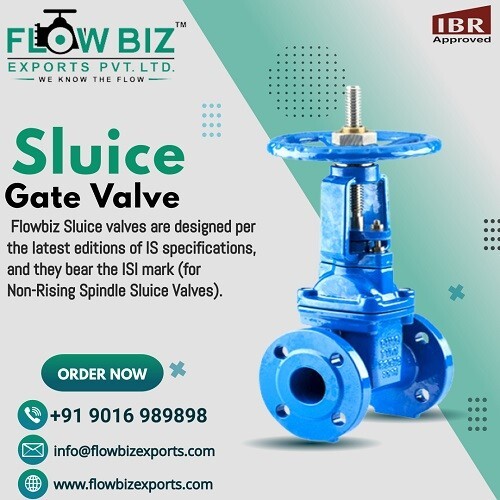
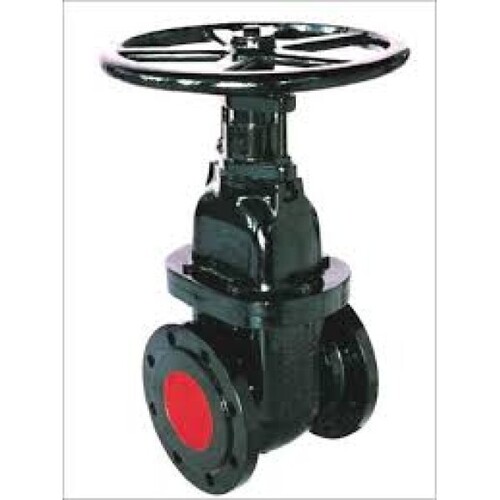
API Standard Sluice Gate Valve Manufacturer Vapi India
Price 1000.0 INR/ Unit
MOQ : 1 Unit
API Standard Sluice Gate Valve Manufacturer Vapi India Specification
- Connection
- Flange Type
- Usage
- Industrial
- Material
- Cast Iron
- Size
- 4 inch
- Power Source
- Manual
- Pressure
- High Pressure
- Media
- Water, Oil, Gas
- Color
- Blue
- Working Temperature
- High
- Surface
- Polished
- Shape
- Round
About API Standard Sluice Gate Valve Manufacturer Vapi India
Understanding Sluice Gate Valves: High-Performance Isolation Technology
The FlowBiz sluice gate valve (also commonly referred to simply as a gate valve) is a heavy-duty industrial instrument engineered to completely start or stop the flow of fluids in a pipeline. It operates by utilizing a flat or wedge-shaped disc that slides verticallyperpendicular to the direction of the fluid streaminto or out of the pipeline.
When the sluice valve is fully opened, the internal gate is drawn entirely up into the valve bonnet, leaving the flow path completely clear. This complete bore design provides an uninterrupted pathway, meaning the moving fluid encounters practically zero resistance. Consequently, systems utilizing gate valves experience a negligible pressure drop ($\Delta P$) across the line, making them incredibly energy-efficient for long-distance transport pipelines.
Technical Specifications & Structural Features
| Parameter | Specification & Engineering Baseline |
| Material of Construction | Heavy-Duty Premium Cast Iron / Cast Carbon Steel |
| Connection Configuration | Industrial Flange Type Connection |
| Surface Finish | High-Precision Polished Finish (Corrosion and Wear Resistant) |
| Bonnet Design | Bolted Bonnet with Outside Screw & Yoke (O.S. & Y.) Architecture |
| Stem Assembly | Rising Spindle / Stem for instant visual position verification |
| Thermal Tolerance | Rated for extreme thermal fluid applications up to 425C |
| Primary Applications | On/Off Isolation of Water, Slurries, Crude Oil, and Industrial Gases |
Key Design & Engineering Benefits
1. Zero-Throttling On/Off Certainty
Sluice gate valves are designed strictly for fully open or fully closed isolation. They are not intended for throttling or regulating flow volumes. Operating a gate valve in a partially open position exposes the gate and seating surfaces to high-velocity fluid streams, causing rapid cavitation, seat erosion, severe pipeline vibration, and acoustic noise. For process loops requiring isolation of dense slurries, the sliding gate cleanly shears through viscous media to establish a tight seal.
2. Advanced O.S. & Y. and Rising Spindle Engineering
Featuring an Outside Screw and Yoke (O.S. & Y.) design, the stem threads are completely isolated from the process media. This protects the critical operating threads from chemical corrosion, scaling, or abrasive particulate wear. The rising spindle provides plant operators with an instant, clear visual confirmation of whether the valve is open or closed.
3. Online Maintenance with Back-Seat Capability
Our sluice valves are designed with an integrated back-seat facility. This critical safety feature allows maintenance technicians to safely replace or repack the gland packing contents while the pipeline remains under full operational pressure, eliminating the need for expensive facility shutdowns.
4. Deep Packing Box for Low Emissions
Equipped with an extra-deep packing box, FlowBiz gate valves guarantee a tight fluid seal around the stem. This design maintains absolute fluid tightness over long operational cycles, drastically extending packing life and mitigating fugitive emissions in volatile chemical or gas distribution networks.
Engineered Versatility: Beyond standard straight-line profiles, our gate valve variants include solid and flexible oblique wedge patterns, needle profiles, and tailored angle patterns to accommodate complex industrial piping designs.
Trusted Sluice Valve Manufacturer in Vapi, India
FlowBiz Exports Pvt. Ltd. is a major manufacturer and exporter operating from Vapi, India. By combining cast iron metallurgy with precise industrial polishing, our sluice gate valves provide robust service across critical processing sectors, including municipal water treatment facilities, heavy oil processing refineries, and high-pressure gas transportation grids.
Frequently Asked Questions (FAQs)
Q: What installation advantages does a flanged connection offer for industrial gate valves?
A: A flange type connection allows the gate valve to be bolted directly to matching pipeline flanges. This traditional configuration provides a highly secure, leak-resistant, and rigid mechanical joint capable of absorbing intense pipeline stress and thermal expansion, while allowing technicians to easily unbolt the unit for offline servicing.
Q: Why does FlowBiz polish the internal and external surfaces of its cast iron valves?
A: The precision polishing process removes microscopic structural irregularities from the cast iron surface. This treatment hinders the accumulation of pipeline impurities, scales, and chemical residues, which greatly increases the valves resistance to localized pitting corrosion and mechanical wear over time.
Q: When is a manual sluice gate valve preferred over an automated one?
A: Manual gate valves are highly reliable for isolation points that do not require frequent cycling, such as main utility isolation lines, pump house headers, and safety bypass loops. They provide dependable hands-on control during system modifications, emergency isolation, and routine facility maintenance shutdowns without relying on electrical or pneumatic power.
Q: Can these valves safely manage heavy sludges and industrial slurries?
A: Yes. The downward sliding motion of the solid wedge disc is designed to pass directly through viscous fluid columns. When closing, the gate effectively clears away settled solids and dense slurries from the bottom pocket, seating firmly into the valve base to ensure a bubble-tight shut-off.
Q: How does the O.S. & Y. design protect the valve from internal media damage?
A: In standard internal-thread valves, the stem threads are constantly submerged in the fluid media, leading to rapid rust or particulate binding. The O.S. & Y. design places the stem threads entirely outside the valve body envelope, keeping them perfectly dry, clean, and accessible for routine external lubrication.
Tell us about your requirement

Price:
Quantity
Select Unit
- 50
- 100
- 200
- 250
- 500
- 1000+
Additional detail
Mobile number
Email

More Products in Gate Valve Category
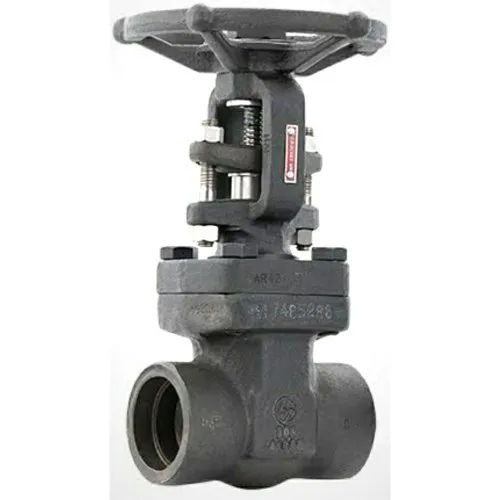
Audco L T Forged Steel Gate Valve
Price 1000 INR / Unit
Minimum Order Quantity : 1 Unit
Material : Brass
Color : Black
Surface : Painted
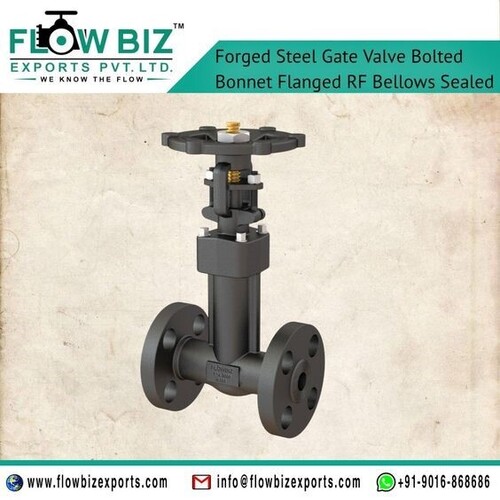
Forged Steel Gate Valve Exporter from Pune India
Price 2000.0 INR / Number
Minimum Order Quantity : 1 Number
Material : Stainless Steel
Color : Black
Surface : Polished
Size : 1/2"14"
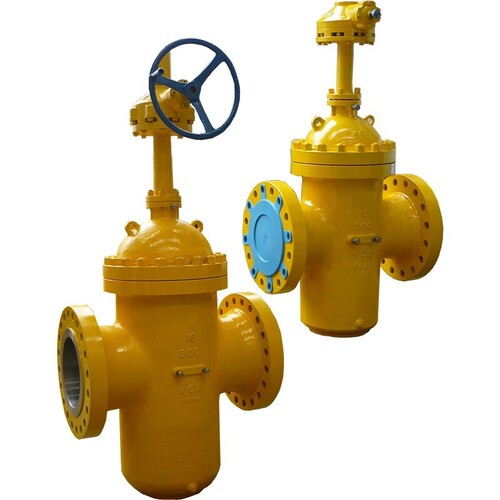
API 6D Slab Gate Valve
Price 800.0 INR / Unit
Minimum Order Quantity : 1 Unit
Material : Stainless Steel
Color : Yellow
Size : Standard Sizes
Cast Iron Sluice Gate Valve
Price 800.0 INR / Piece
Minimum Order Quantity : 1 Piece
Material : Cast Iron
Color : Black
Surface : Polished
Size : 20 mm

 Send Inquiry
Our Products
- Needle Valve
- Ball Valve
- Globe Valve
- Gate Valve
- Y Type Strainer
- Piston Valve
- Check Valve
- Sight Glass
- Butterfly Valve
- Swing Check Valve
- Damper Valve
- Basket Strainer
- Pressure Reducing Valve
- Double Block Bleed Valve
- Moisture Separator
- Forged Valve
- Diaphragm Valve
- Mini Ball Valve
- Forbes Marshall PRV
- T Type Strainer
- Plug Valve
- Blow Down Valve
- Air Valve
- Non Return Valve
- Safety Valve
- Steam Trap
- Gasket
- L&T Ball Valve
- L&T Butterfly Valve
- AUDCO Ball Valve
- SPIRAX Marshall PRV
- Solenoid Valve
- oxygen
- roto seal coupling
- straight union
- flow control
- ptfe sheets
- ptfe
- rubber products
- felt products
- Asbestos products
- Engineered plastics products
- rubber seals
- rubber gasket
- Sight Glasses
- Jacketed Valves
- flush bottom valve
- strainer
- Sluice Gate Valve
- Slab Gate Valve
- PTFE Lined Valve
- PTFE Lined Valves


416,417 4th Floor, A Block Safal 8, Ajit Mill, Cross Rd, Rakhial,Ahmedabad - 380023, Gujarat, India

Mr Shakir Ansari
(Director)
Mobile :08071793447
 Send Inquiry
 Send SMS
 Call Me Free
Developed and Managed by Infocom Network Private Limited.
