
Call us now :08071793447
 Send Inquiry
 Send Inquiry
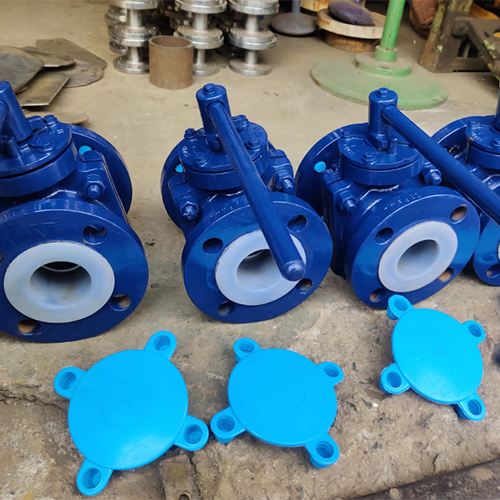
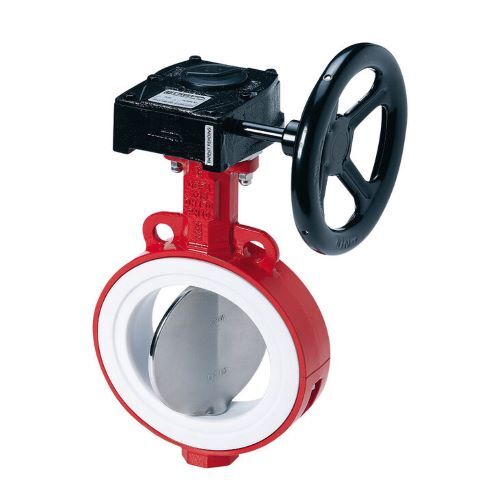
Narmada PTFE Lined Valve Manufacturer & Supplier
Price 5000.0 INR/ Piece
MOQ : 1 Piece
Narmada PTFE Lined Valve Manufacturer & Supplier Specification
- Application
- Process Industries like-Chemical, Power, Refinery, Petrochemicals, Nuclear, Water
- Type
- Manual
- Media
- Water
- Port Size
- Customized as per requirement
- Color
- Silver, Blue
- Temperature
- Up to 200C Celsius (oC)
- Disc
- SS 304
About Narmada PTFE Lined Valve Manufacturer & Supplier
Understanding PTFE-Lined Valves: High-Performance Chemical Isolation
In industrial fluid dynamics, transporting highly aggressive or corrosive mediasuch as concentrated acids, caustics, chlorides, and reactive solventspresents a severe challenge. Standard metallic valves, even those fabricated from high-grade alloys, are prone to chemical pitting, oxidation, and localized erosion. This material degradation can lead to hazardous line leaks, cross-contamination, and expensive, unscheduled plant downtime.
A PTFE-Lined Valve provides an engineered solution to severe chemical corrosion. By taking a rugged, pressure-bearing metallic outer body shell and completely encapsulating its internal wetted flow path with a thick, uniform lining of PTFE (Polytetrafluoroethylene), the underlying metal is completely isolated from the process stream. This pairs the mechanical strength of cast iron, carbon steel, or stainless steel with the near-total chemical inertness of fluoropolymers.
In industrial fluid dynamics, transporting highly aggressive or corrosive mediasuch as concentrated acids, caustics, chlorides, and reactive solventspresents a severe challenge. Standard metallic valves, even those fabricated from high-grade alloys, are prone to chemical pitting, oxidation, and localized erosion. This material degradation can lead to hazardous line leaks, cross-contamination, and expensive, unscheduled plant downtime.
A PTFE-Lined Valve provides an engineered solution to severe chemical corrosion. By taking a rugged, pressure-bearing metallic outer body shell and completely encapsulating its internal wetted flow path with a thick, uniform lining of PTFE (Polytetrafluoroethylene), the underlying metal is completely isolated from the process stream. This pairs the mechanical strength of cast iron, carbon steel, or stainless steel with the near-total chemical inertness of fluoropolymers.
Technical Specifications & Design Architecture
PTFE-lined valves are precision-engineered to meet stringent industrial safety parameters, ensuring absolute containment under volatile process pressures.
PTFE-lined valves are precision-engineered to meet stringent industrial safety parameters, ensuring absolute containment under volatile process pressures.
Core Engineering Parameters
Component Profile
Material & Operational Specifications
Lining Material
Premium, High-Density Virgin PTFE (Polytetrafluoroethylene)
Internal Metal Core / Trim
High-Strength Stainless Steel (SS 304 / SS 316)
Thermal Operating Envelope
Continuous mechanical stability at temperatures up to 200C
Pressure Containment Range
Designed to prevent high-pressure leakage, combustion, and explosions
Operational Control Types
Manual Type (High-torque Handwheel or Lever-actuated)
External Aesthetic Finish
High-visibility Silver-Blue industrial protective coating
Customization Framework
Fully customizable port sizing and face-to-face dimensions
| Component Profile | Material & Operational Specifications |
| Lining Material | Premium, High-Density Virgin PTFE (Polytetrafluoroethylene) |
| Internal Metal Core / Trim | High-Strength Stainless Steel (SS 304 / SS 316) |
| Thermal Operating Envelope | Continuous mechanical stability at temperatures up to 200C |
| Pressure Containment Range | Designed to prevent high-pressure leakage, combustion, and explosions |
| Operational Control Types | Manual Type (High-torque Handwheel or Lever-actuated) |
| External Aesthetic Finish | High-visibility Silver-Blue industrial protective coating |
| Customization Framework | Fully customizable port sizing and face-to-face dimensions |
Critical Functions & Mechanical Advantages
1. Absolute Chemical Resistance & Fluid Purity
PTFE is universally recognized for its non-reactive properties and low coefficient of friction. Because the thick fluoropolymer layer covers every square millimeter of the internal body, ball, stem, and seat, the process fluid cannot attack the metallic boundaries. The non-stick nature of Teflon also prevents fluid crystallization, scale accumulation, and biological fouling, ensuring clean, unobstructed flow paths.
PTFE is universally recognized for its non-reactive properties and low coefficient of friction. Because the thick fluoropolymer layer covers every square millimeter of the internal body, ball, stem, and seat, the process fluid cannot attack the metallic boundaries. The non-stick nature of Teflon also prevents fluid crystallization, scale accumulation, and biological fouling, ensuring clean, unobstructed flow paths.
2. High Thermal Resilience up to 200C
While standard lightweight plastic piping systems soften, deform, or burst under thermal and physical stress, lined valves utilize a robust metal casting as their structural skeletal backbone. Supported internally by durable SS 304 components, these valves handle continuous process temperatures reaching up to 200C without losing dimensional stability or suffering vacuum collapse.
While standard lightweight plastic piping systems soften, deform, or burst under thermal and physical stress, lined valves utilize a robust metal casting as their structural skeletal backbone. Supported internally by durable SS 304 components, these valves handle continuous process temperatures reaching up to 200C without losing dimensional stability or suffering vacuum collapse.
3. Precision Customization & Drop-In Integration
To eliminate the need for piping reducers or adapterswhich introduce localized fluid turbulence and expand the system's structural footprintPTFE-lined valves feature fully customizable port sizes. Engineering teams can specify exact bore requirements and connection standards during fabrication to ensure a seamless drop-in fit into existing plant headers.
To eliminate the need for piping reducers or adapterswhich introduce localized fluid turbulence and expand the system's structural footprintPTFE-lined valves feature fully customizable port sizes. Engineering teams can specify exact bore requirements and connection standards during fabrication to ensure a seamless drop-in fit into existing plant headers.
Strategic Industrial Application Scope
Because of their durability and tight sealing capabilities, lined valves serve as vital safety boundaries across a broad array of demanding sectors:
-
Chemical & Fertilizer Processing: Handling aggressive chemical blends, volatile organic compounds, hot acids, and ammonia streams.
-
Petrochemical Plants & Oil Refineries: Regulating sour water loops, chemical injection headers, and corrosive wastewater processing lines.
-
Pharmaceutical & Pulp/Paper Production: Managing high-purity chemical reactions, bleaching agents, and heavily alkaline liquor lines without product contamination.
-
Power Generation & Nuclear Facilities: Providing dependable isolation in demineralized water treatment systems and auxiliary utility circuits.
Because of their durability and tight sealing capabilities, lined valves serve as vital safety boundaries across a broad array of demanding sectors:
-
Chemical & Fertilizer Processing: Handling aggressive chemical blends, volatile organic compounds, hot acids, and ammonia streams.
-
Petrochemical Plants & Oil Refineries: Regulating sour water loops, chemical injection headers, and corrosive wastewater processing lines.
-
Pharmaceutical & Pulp/Paper Production: Managing high-purity chemical reactions, bleaching agents, and heavily alkaline liquor lines without product contamination.
-
Power Generation & Nuclear Facilities: Providing dependable isolation in demineralized water treatment systems and auxiliary utility circuits.
Frequently Asked Questions (FAQ)
Q: What is the main operational benefit of a manual PTFE-lined valve over standard alloys?
A: While premium metal alloys like Hastelloy or Titanium provide good corrosion resistance, they are highly expensive and can still experience specialized corrosion like stress cracking or leaching over time. A PTFE-lined valve offers an impenetrable chemical barrier at a fraction of the cost, ensuring a longer operating lifespan and lower routine maintenance costs.
A: While premium metal alloys like Hastelloy or Titanium provide good corrosion resistance, they are highly expensive and can still experience specialized corrosion like stress cracking or leaching over time. A PTFE-lined valve offers an impenetrable chemical barrier at a fraction of the cost, ensuring a longer operating lifespan and lower routine maintenance costs.
Q: How do manual handwheels or levers interact with the inner lined elements?
A: The manual mechanism operates by turning an external handwheel or lever, which smoothly rotates an internal stem and ball/disc core. Because the wetted surfaces are completely lined with low-friction PTFE, the valve exhibits a low operating torque. This allows field operators to easily open, close, or modulate flow rates without needing complex automation systems.
A: The manual mechanism operates by turning an external handwheel or lever, which smoothly rotates an internal stem and ball/disc core. Because the wetted surfaces are completely lined with low-friction PTFE, the valve exhibits a low operating torque. This allows field operators to easily open, close, or modulate flow rates without needing complex automation systems.
Q: What is the technical workflow for ordering a customized valve from the Narmada facility?
A: The procurement process focuses on precise application matching:
-
Parameter Sharing: Sourcing teams provide their core operating criteria, including exact fluid chemical properties, line velocities, maximum pressure thresholds, and target operating temperatures.
-
Precision Engineering: Our technical team determines the ideal base casting configuration and customizes the port size to align with your pipeline footprint.
-
Quality Verification: The finished unit undergoes thorough hydrostatic pressure testing and high-voltage spark testing to ensure the integrity of the PTFE lining before delivery.
A: The procurement process focuses on precise application matching:
-
Parameter Sharing: Sourcing teams provide their core operating criteria, including exact fluid chemical properties, line velocities, maximum pressure thresholds, and target operating temperatures.
-
Precision Engineering: Our technical team determines the ideal base casting configuration and customizes the port size to align with your pipeline footprint.
-
Quality Verification: The finished unit undergoes thorough hydrostatic pressure testing and high-voltage spark testing to ensure the integrity of the PTFE lining before delivery.
Q: How do lined valves contribute to plant safety during overpressure events?
A: These high-integrity units are designed to function reliably as tight shut-off boundaries. By preventing internal fluid bypass and eliminating external packing leaks, they ensure that highly volatile, toxic, or combustible chemicals remain contained within the pipe loops. This prevents hazardous atmospheric exposure, chemical fires, and localized explosions.
A: These high-integrity units are designed to function reliably as tight shut-off boundaries. By preventing internal fluid bypass and eliminating external packing leaks, they ensure that highly volatile, toxic, or combustible chemicals remain contained within the pipe loops. This prevents hazardous atmospheric exposure, chemical fires, and localized explosions.
Tell us about your requirement

Price:
Quantity
Select Unit
- 50
- 100
- 200
- 250
- 500
- 1000+
Additional detail
Mobile number
Email

More Products in PTFE Lined Valve Category
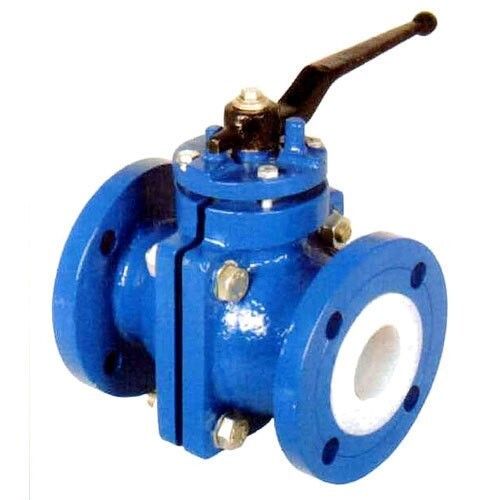
PTFE Lined Ball Valve Manufacturer in Vadodara
Price 2000 INR / Unit
Minimum Order Quantity : 1 Number
Media : Other, Acid, Alkali, Solvent, Corrosive Fluids
Application : Chemical industries, Pharmaceuticals, Petrochemical, Water Treatment
Temperature : Up to 200C
Port Size : 15 mm to 300 mm (1/2 to 12)
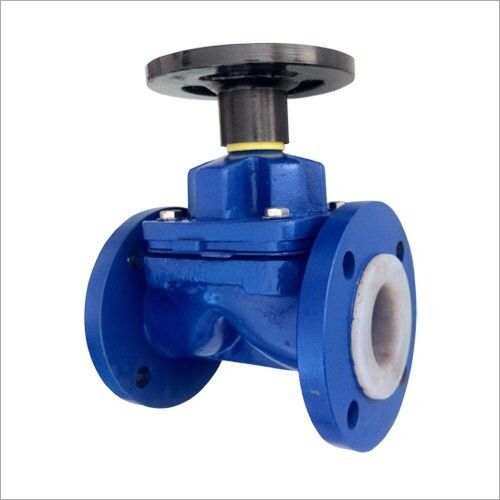
PTFE Lined Diaphragm Valve Manufacturer in Vadodara
Price 2300 INR / Unit
Minimum Order Quantity : 1 Number
Media : Other, Corrosive fluids, slurries, pure liquids
Application : Chemical, pharmaceutical, and industrial fluid control systems
Temperature : 10C to 180C
Port Size : DN15 to DN300
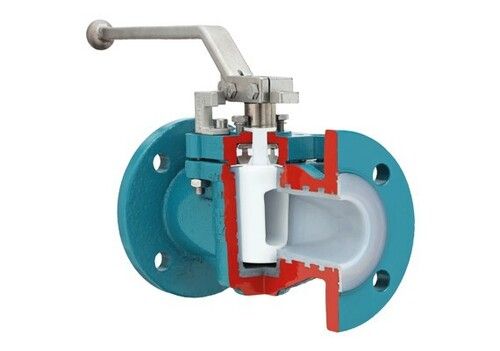
PTFE Lined Plug Valve Manufacturer in Surat
Price 1400 INR / Unit
Minimum Order Quantity : 1 Number
Media : Other, Liquids, Gases, Slurries, Acids
Application : Chemical, Petrochemical, Pharmaceutical, Food Processing, Corrosive fluids
Temperature : 29C to +180C
Port Size : Full Bore

 Send Inquiry
Our Products
- Needle Valve
- Ball Valve
- Globe Valve
- Gate Valve
- Y Type Strainer
- Piston Valve
- Check Valve
- Sight Glass
- Butterfly Valve
- Swing Check Valve
- Damper Valve
- Basket Strainer
- Pressure Reducing Valve
- Double Block Bleed Valve
- Moisture Separator
- Forged Valve
- Diaphragm Valve
- Mini Ball Valve
- Forbes Marshall PRV
- T Type Strainer
- Plug Valve
- Blow Down Valve
- Air Valve
- Non Return Valve
- Safety Valve
- Steam Trap
- Gasket
- L&T Ball Valve
- L&T Butterfly Valve
- AUDCO Ball Valve
- SPIRAX Marshall PRV
- Solenoid Valve
- oxygen
- roto seal coupling
- straight union
- flow control
- ptfe sheets
- ptfe
- rubber products
- felt products
- Asbestos products
- Engineered plastics products
- rubber seals
- rubber gasket
- Sight Glasses
- Jacketed Valves
- flush bottom valve
- strainer
- Sluice Gate Valve
- Slab Gate Valve
- PTFE Lined Valve
- PTFE Lined Valves


416,417 4th Floor, A Block Safal 8, Ajit Mill, Cross Rd, Rakhial,Ahmedabad - 380023, Gujarat, India

Mr Shakir Ansari
(Director)
Mobile :08071793447
 Send Inquiry
 Send SMS
 Call Me Free
Developed and Managed by Infocom Network Private Limited.
