
Call us now :08071780343
 Send Inquiry
 Send Inquiry
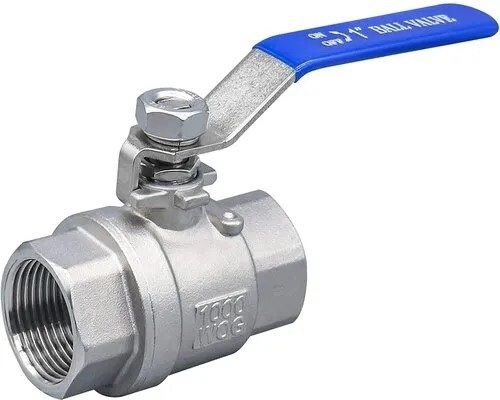
High Pressure WOG Ball Valve
Price 1400.0 INR/ Piece
MOQ : 1 Piece
High Pressure WOG Ball Valve Specification
- Structure
- Ball
- Connection
- Threaded/Flanged
- Channels
- Two Way
- Caliber
- Standard
- Pressure
- 150 PSI / 300 PSI
- Material
- Stainless Steel
- Power
- Manual
- Media
- Water, Oil, Gas
- Temperature of Media
- Normal Temperature
- Port Size
- 1/2 Inch to 4 Inch
- Flange
- ANSI/DIN/IS
- Finish
- Polished
- Application
- Industrial, Water Supply, Oil & Gas, Chemical
- Operation Type
- Quarter Turn
- Body Material
- Forged or Cast Stainless Steel
- Design Standard
- BS 5351
- End Connection
- Screwed/Flanged/BSP/NPT
- Leakage Class
- Bubble Tight
- Ball Material
- SS 304/316
- Corrosion Resistance
- Excellent
- Seat Material
- PTFE
- Handle Type
- Lever
- Flow Control
- On/Off
High Pressure WOG Ball Valve About
High-Performance WOG Ball Valve Series | FlowBiz Valves
FlowBiz Valves is a premier, engineering-driven manufacturer, supplier, and global exporter of industrial WOG Ball Valves in India. Operating through a highly responsive national supply matrix with major distribution networks in Pune, Maharashtra, and pan-India, we design and produce these reliable fluid-isolation components. They are engineered to manage everyday fluid logistics and critical isolation demands across municipal, commercial, and heavy processing environments.
The standard method of stating the pressure rating for this series is WOG, which indicates that the valve is specifically engineered and certified suitable for Water, Oil, and Gas media (excluding combustible fuel gases). The accompanying numerical value sets the maximum cold working pressure per square inch (PSI) the valve body can safely contain without structural distortion or sealing degradation.
Technical Specifications & Compliance Matrix
Our WOG series is precision-machined and rigorously verified to satisfy strict international pipeline and process engineering codes:
| Parameter | Technical Specification & Engineering Limits |
| Bore Profile | Full Port / Full Bore Layout (Unobstructed flow matching pipe inner diameter) |
| Size Matrix Range | Versatile pipeline footprint from 1/2" inch to 4" inches |
| Design Standards | Manufactured in strict compliance with BS 5351 and ASME B16.34 |
| Threading Framework | Precision-cut Threaded Ends conforming to ASME B1.20.1 specifications |
| Flange Standard Patterns | Adaptable across global ANSI, DIN, and IS flanging networks |
| Quality Verification | 100% hydrostatically and pneumatically proof-tested per API 598 norms |
| Isolation Integrity | ANSI/FCI 70-2 Leakage Class VI (Absolute bubble-tight containment) |
| Metallurgical Standards | Fully compliant with sour gas and oil protocols per NACE MR0175 |
| Fire Safety Framework | Designed to integrate safety features matching API 607 parameters |
Strategic Design & Mechanical Engineering Features
1. High-Caliber Full Port / Full Bore Layout
Featuring a true Full Port design, the internal diameter of the flow path through the rotating ball perfectly matches the internal diameter of the connected pipeline. When the valve is turned to the fully open position, it creates a perfectly straight, unobstructed path. This configuration eliminates fluid turbulence, keeps pressure drops near zero, and prevents internal wear from localized material erosion, maximizing overall plant operational efficiency.
2. Grounded Ball and Stem Assembly
To prevent structural binding, uneven seat wear, and erratic operating torque under full line pressure, every valve features a precision-ground ball and stem assembly. The ball is machined to a mirror-smooth spherical finish, which dramatically minimizes friction against the polymer seats. This smooth action significantly reduces the manual torque required to operate the line, extends the life of the internal trims, and guarantees a long operational lifecycle.
3. Integrated Security & Safety Lever Actuation
Manual line regulation is engineered for high-risk zones and automated compliance:
-
Locking Device Mechanism: Every manual valve can be outfitted with a specialized locking handle. This features an integrated fastening bore that allows operators to padlock the handle in a specific position, preventing unauthorized manual tampering or accidental operation.
-
Spring Return (Dead-Man) Lever: For high-risk sampling stations, drain lines, or critical dump lines, we provide a spring return lever matching API 607 layouts. The valve remains open only while an operator holds the lever; releasing it immediately snaps the valve shut automatically, preventing hazardous fluid loss or environmental contamination.
4. NACE MR0175 Sour Gas Compliance
Essential for modern downstream refineries, petrochemical units, and midstream oil lines. Our WOG stainless steel valves can be fully certified to meet NACE MR0175 requirements. This ensures the raw metallurgy and internal trim alloys undergo specific thermal processing to resist sulfide stress cracking (SSC) and hydrogen-induced cracking (HIC) when exposed to sour crude oil or fluids containing hydrogen sulfide (HS).
Advanced Materials & Surface Passivation
Achieving long-term valve durability requires matching the metallurgy and internal sealing trims to the specific chemical, thermal, and mechanical stresses of your process fluid:
1. Sturdy Forged or Cast Stainless Steel Bodies
The valve bodies are manufactured from high-grade forged or cast stainless steel (such as ASTM A351 CF8/CF8M or A182 F304/F316). To shield the raw metallurgy from atmospheric oxidation, chemical vapors, and harsh coastal humidity, the valves receive a high-durability polished finish. This surface treatment offers excellent protection against rust and environmental wear, extending the valve's service life in demanding industrial settings.
2. High-Purity PTFE Sealing Matrix
The mirror-finished internal ball is mounted securely against premium PTFE (Teflon) seats. PTFE exhibits near-total chemical inertness across water, oil, and gas lines, has zero moisture absorption, and provides an exceptionally low coefficient of friction. This minimizes torque, enhances sealing quality, and guarantees a reliable Class VI bubble-tight shut-off with zero permissible fluid weepage.
Flexible Pipeline Connectivity Matrix
FlowBiz WOG ball valves are engineered to integrate seamlessly into existing piping systems or new project installations across multiple connection options:
-
Screwed / Threaded Connections: Precision-cut BSP or NPT threads (per ASME B1.20.1) for easy installation, low-profile instrument skids, and rapid field removal.
-
Flanged Connections: Machined to match international ANSI, DIN, or IS flange standards to handle high-vibration distribution lines and ensure robust, leak-free joints.
Frequently Asked Questions (FAQs)
Q: How does a manual lever quarter-turn ball valve function?
A: A manual lever ball valve operates using a straightforward quarter-turn mechanism. Rotating the handle exactly 90 degrees rotates the internal ground ball from fully open to fully closed. The handle lies in perfect alignment with the pipeline when the valve is open and sits perpendicular to it when closed, creating a simple, foolproof visual verification of the valve's status for plant operators.
Q: When should a bubble-tight leakage class ball valve be preferred?
A: You should specify a Class VI bubble-tight leakage class valve for critical industrial processes handling chemicals, volatile gases, or high-pressure oils where zero fluid migration past the seats can be tolerated. These zero-leakage valves prevent downstream product contamination, maintain steady system pressures, eliminate hazardous fluid loss, and protect the surrounding environment from toxic emissions.
Q: What applications are best suited for these stainless steel WOG ball valves?
A: Thanks to their robust stainless steel construction and high chemical resistance, these WOG valves are commonly deployed across industrial processing plants, chemical production units, petrochemical refineries, municipal water supply networks, and oil & gas pipelines. They provide reliable, low-maintenance on/off control wherever corrosion resistance and dependable containment are critical.
Q: Why choose FlowBiz as your long-term WOG ball valve partner in Pune?
A: FlowBiz Valves balances high-precision engineering with strict compliance to global codes like BS 5351 and API 6D. By hydrostatically and pneumatically proof-testing 100% of our production lines according to API 598 protocols, we ensure that each individual valve delivers Class VI zero-leakage performance before shipping. Our capacity to supply high-yield, NACE-compliant fluid control equipment from 1/2" to 4" inches at highly competitive market prices makes us a trusted supply chain partner across India and worldwide.
Tell us about your requirement

Price:
Quantity
Select Unit
- 50
- 100
- 200
- 250
- 500
- 1000+
Additional detail
Mobile number
Email

More Products in Ball Valve Category
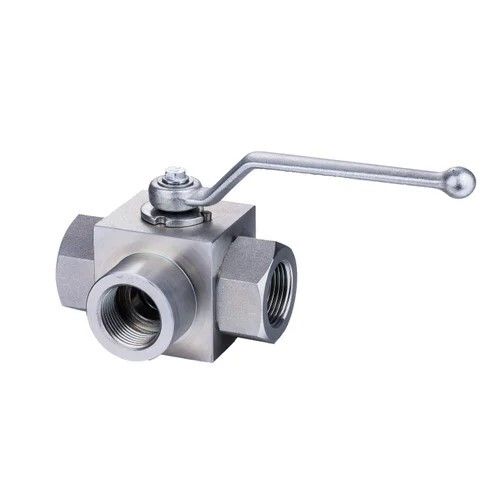
3 Way High Pressure Ball Valve Manufacturer in India
Price 1500 INR / Unit
Minimum Order Quantity : 1 Number
Application : Hydraulic, Chemical Processing, Petrochemical, Water Treatment, Gas Lines
Material : Other, Stainless Steel, Carbon Steel, Brass
Media : Other, Water, Oil, Gas, Chemical
Finish : Precision Machined, Polished
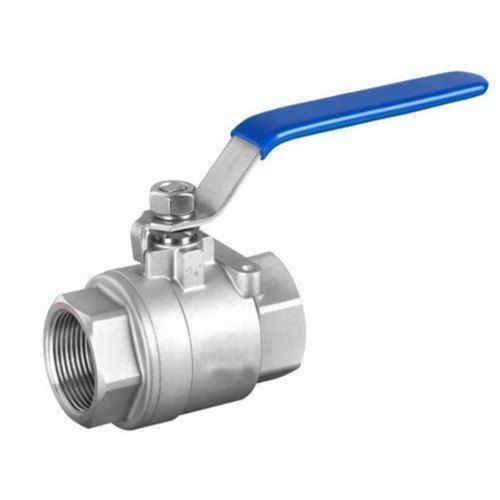
Ball Valve Manufacturer in Jamnagar
Price 700 INR / Unit
Minimum Order Quantity : 1 Number
Application : Industrial, Plumbing, Agriculture
Material : Brass
Media : Other, Water, Oil, Gas
Finish : Chrome Plated
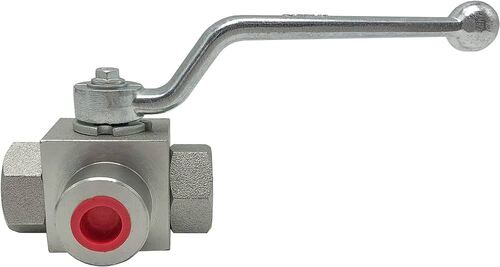
Stainless Steel 3 Way High Pressure Ball Valve
Price 800.0 INR / Piece
Minimum Order Quantity : 1 Number
Application : Industrial, Chemical, Oil & Gas, Water Treatment
Material : Other, Stainless Steel / Carbon Steel
Media : Other, Oil, Gas, Water, Air
Finish : Polished / Painted
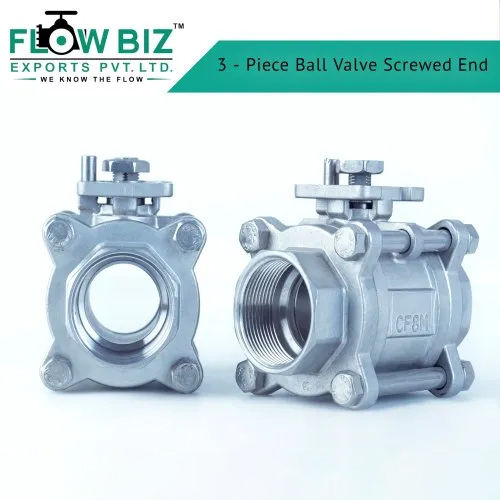
Three Piece Screwed End Ball Valves
Price 469 INR / Unit
Minimum Order Quantity : 10 Units
Application : Industrial
Material : Brass
Media : Gas
Finish : Polished

 Send Inquiry
Our Products
- Needle Valve
- Ball Valve
- Globe Valve
- Gate Valve
- Y Type Strainer
- Piston Valve
- Check Valve
- Sight Glass
- Butterfly Valve
- Swing Check Valve
- Damper Valve
- Basket Strainer
- Pressure Reducing Valve
- Double Block Bleed Valve
- Moisture Separator
- Forged Valve
- Diaphragm Valve
- Mini Ball Valve
- Forbes Marshall PRV
- T Type Strainer
- Plug Valve
- Blow Down Valve
- Air Valve
- Non Return Valve
- Safety Valve
- Steam Trap
- Gasket
- L&T Ball Valve
- L&T Butterfly Valve
- AUDCO Ball Valve
- SPIRAX Marshall PRV
- Solenoid Valve
- oxygen
- roto seal coupling
- straight union
- flow control
- ptfe sheets
- ptfe
- rubber products
- felt products
- Asbestos products
- Engineered plastics products
- rubber seals
- rubber gasket
- Sight Glasses
- Jacketed Valves
- flush bottom valve
- strainer
- Sluice Gate Valve
- Slab Gate Valve
- PTFE Lined Valve
- PTFE Lined Valves


416,417 4th Floor, A Block Safal 8, Ajit Mill, Cross Rd, Rakhial,Ahmedabad - 380023, Gujarat, India

Mr Shakir Ansari
(Director)
Mobile :08071780343
 Send Inquiry
 Send SMS
 Call Me Free
Developed and Managed by Infocom Network Private Limited.
