
Call us now :08071780343
 Send Inquiry
 Send Inquiry
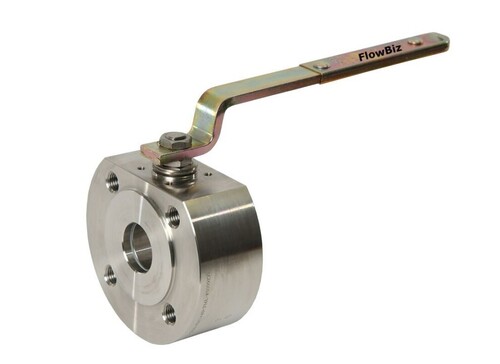
Wafer Type Ball Valve Industrial SS Ball Valves
Price 4000.0 INR/ Piece
MOQ : 1 Piece
Wafer Type Ball Valve Industrial SS Ball Valves Specification
- Caliber
- Full Bore
- Pressure
- PN10, PN16, PN25
- Channels
- 2 Way
- Connection
- Wafer with Flanged Ends
- Structure
- Wafer Type
- Material
- Stainless Steel / Carbon Steel / Cast Iron
- Power
- Manual
- Media
- Water, Oil, Gas, Chemical
- Temperature of Media
- -20°C to 180°C
- Port Size
- DN15 to DN300
- Flange
- ANSI/PN/JIS Standard
- Finish
- Epoxy Coated / Painted / Mirror Finish
- Application
- Industrial, Water Treatment, Chemical Processing, Oil & Gas
- Seat Material
- PTFE / RPTFE
- Working Life
- 100,000 Cycles
- Design Standard
- ISO 5211 / API 6D
- Operation Method
- Lever Operated / Gear Operated
- Leakage Class
- Class VI
- End Connection
- Wafer Type
- Ball Material
- SS 304 / SS 316
- Stem Material
- Stainless Steel
- Mounting Type
- Between Flanges
- Testing Standard
- API 598
- Face to Face Dimension
- AS per ISO 5752
Wafer Type Ball Valve Industrial SS Ball Valves About
High-Performance Wafer Type Ball Valves | FlowBiz Valves
FlowBiz Valves is a premier, engineering-driven manufacturer, supplier, and global exporter of industrial Wafer Type Ball Valves in India. Operating from our advanced production facilitieswith key manufacturing hubs in Ahmedabad and Mumbaiwe are recognized as a market leader, producing the most significant volume of wafer-type series in India.
Our wafer type ball valves are precision-crafted to meet demanding industrial needs, offering an exceptionally compact, short face-to-face profile. Designed to slide directly between standard pipeline flanges, these valves provide a highly economical, space-saving, and lightweight alternative to traditional flanged ball valves, making them ideal for light-to-medium-duty utilities and high-efficiency space-constrained piping layouts.
Technical Specifications & Compliance Matrix
Our wafer-type production series is precision-machined from traceable raw stock to satisfy strict international pressure vessel and pipeline criteria:
| Parameter | Technical Specification & Engineering Limits |
| Bore Configuration | Full Bore Structure (Unobstructed flow, zero pressure drop) |
| Sealing Architecture | Floating Ball Type combined with premium PTFE / RPTFE seats |
| Pressure Class Ratings | Rated for continuous industrial working loads: PN10, PN16, and PN25 |
| Thermal Operating Envelope | Flawless physical stabilization ranging from -20C to 180C |
| Face-to-Face Standard | Engineered in strict accordance with ISO 5752 short lengths |
| Core Design Standards | Fully compliant with international ISO 5211 and API 6D parameters |
| Testing Compliance | 100% factory hydrostatically and pneumatically verified per API 598 |
| Isolation Integrity | ANSI/FCI 70-2 Leakage Class VI (Absolute bubble-tight containment) |
| Flange Compatibility Matrix | Designed to bolt between universal ANSI, PN, and JIS flanges |
| Service Lifespan Rating | High-durability internals engineered to exceed 100,000 operation cycles |
Strategic Design & Mechanical Safety Features
Flange-to-Flange Wafer Assembly Matrix Upstream Flange FlowBiz Valve Downstream Flange (ANSI/DIN/JIS) (ISO 5752 Wafer) (ANSI/DIN/JIS) Through-Bolts Compress the Entire Assembly Firmly Across the Pipeline Joint Axis 1. Ultra-Compact Zero-Holdup Area & Low Torque
Because the wafer design eliminates bulky bolted end caps, the internal body volume is compressed down to the absolute minimum. This creates a Zero-Holdup Area inside the valve casing, preventing fluid stagnation, material build-up, or cross-contamination when changing process batches. Paired with a high-strength floating ball concept resting on pre-compressed seats, the internal mechanics ensure an excellent seal with low friction and smooth operational torque.
2. Immediate Visual Verification of Valve Status
Manual operation features an intuitive, fast-acting quarter-turn (90 degree) mechanism. The manual handle or lever lies in perfect alignment with the pipeline flow axis once open. When turned to the fully closed position, the handle sits perfectly vertical to the line, creating a simple, unambiguous visual verification of the valve's status that allows floor operators to check line conditions from a distance.
3. Anti-Blowout Stem & Push-Type Gland
Managing active industrial fluid lines requires uncompromised personal safety boundaries:
-
Anti-Blowout Stem: Engineered with an internal, bottom-entry mechanical shoulder that prevents the stem from being ejected or blown out of the stuffing box under unexpected pressure spikes.
-
Push-Type Gland Packing: Utilizes a heavy-duty compression gland mechanism that applies uniform downward pressure onto the packing rings, preventing external emissions and extending the valve's service life.
4. Direct Automation Integration (ISO 5211 Pad)
Every valve body incorporates an Integral ISO 5211 Mounting Pad cast directly into the top works as standard. This standardized interface features precise bolt patterns, permitting bracketless, direct-mount installation of pneumatic cylinders or electric motorized actuators. This setup eliminates the cost of custom brackets and simplifies automated system integration.
Metallurgy & Protective Coating Finishes
Achieving a long service life exceeding 100,000 continuous cycles requires matching the valve metallurgy and external protective layers to your specific plant environment:
1. High-Grade Material Configurations
-
Body Casing Options: Available in premium Stainless Steel (SS304 / SS316) for superior chemical resistance or Carbon Steel for heavy mechanical strength in water, oil, and gas utilities.
-
Internal Ball Trim: Features an ultra-smooth, mirror-finished ball machined from solid SS304 or SS316. This fine surface finish minimizes friction against the seats, reducing operational torque and protecting the seals from premature wear.
2. External Surface Protection Options
To prevent atmospheric corrosion, oxidation, and rust in damp industrial environments, our valves can be finished with specialized exterior coatings:
-
High-Build Epoxy Coated Finishes: Provides high resistance to chemical splashes, aggressive process vapors, and washdowns.
-
Industrial Painted or Mirror Polished Finishes: Adds a durable, professional finish tailored to meet aesthetic or color-coded plant mapping protocols.
Manual Operation & Automation Vector Options
FlowBiz wafer type ball valves adapt quickly to your exact operational requirements and port constraints:
-
Full Bore Flow Profile: The internal path matches the pipeline diameter exactly, ensuring optimal throughput with minimal flow resistance, which reduces pressure loss and increases general pump efficiency.
-
Lever Operation Handles: Designed for smaller sizes (1/2" to 4" inches), providing rapid, comfortable manual actuation and swift shut-off capabilities.
-
Mechanical Gear Operators: Recommended for larger sizes or high-pressure loops, utilizing gear reduction to provide superior torque mechanical advantage and easier manual handling for precise throttling control.
Frequently Asked Questions (FAQs)
Q: How exactly is a wafer type ball valve installed between standard pipeline flanges?
A: Wafer ball valves are designed with a short, compact face-to-face profile that does not include independent end flanges. To install the unit, simply center and align the valve body between your two existing pipeline flanges. Long through-bolts or studs are then passed completely through both pipe flanges, sandwiching the valve body securely between them. Tightening these bolts to the specified torque compresses the pipeline gaskets against the valve face, creating a strong, leak-proof seal. This streamlined design makes initial installation, tool-free alignment, and routine maintenance quick and simple.
Q: What distinct advantage do PTFE and RPTFE seats provide in utility lines?
A: Premium PTFE (Polytetrafluoroethylene) seats provide near-total chemical inertness, a very low coefficient of friction, and excellent resistance to material pitting. Choosing RPTFE (Reinforced PTFE) incorporates specialized glass fiber or carbon additives into the polymer matrix. This reinforcement enhances mechanical wear resistance, prevents material cold-flow deformation under intensive cycle loads, and ensures a tight, Class VI bubble-tight shut-off across a wide temperature spectrum from -20C to 180C.
Q: Why is a wafer type ball valve considered more economical for light-to-medium industrial plants?
A: Standard flanged valves require significantly more raw metal to cast the two large, independent end flanges, which increases weight and component cost. A wafer type ball valve eliminates this extra bulk entirely, utilizing a short face-to-face body that requires far less raw material to manufacture. This significantly lowers production costs and reduces total shipping weight, passing substantial savings down to the end user while maintaining strict compliance with API 6D and API 598 testing standards.
Q: Why choose FlowBiz as your long-term wafer type ball valve manufacturer?
A: FlowBiz Valves balances precision industrial engineering with efficient, volume-driven manufacturing capabilities. By ensuring every individual valve is rigorously tested to API 598 protocols, utilizing interchangeable spares for low-cost field maintenance, and providing versatile compatibility across ANSI, DIN, and JIS standards, we eliminate operational risks in the field. Our capacity to deliver high-yield, low-maintenance wafer type ball valves makes us a highly dependable supply chain partner across India, Vadodara, and global export markets.
A single relevant question to help guide your system layout selection:
-
What is the size of your pipeline, and will your system layout require manual lever handles or automated pneumatic/electric actuators?
Tell us about your requirement

Price:
Quantity
Select Unit
- 50
- 100
- 200
- 250
- 500
- 1000+
Additional detail
Mobile number
Email

More Products in Ball Valve Category
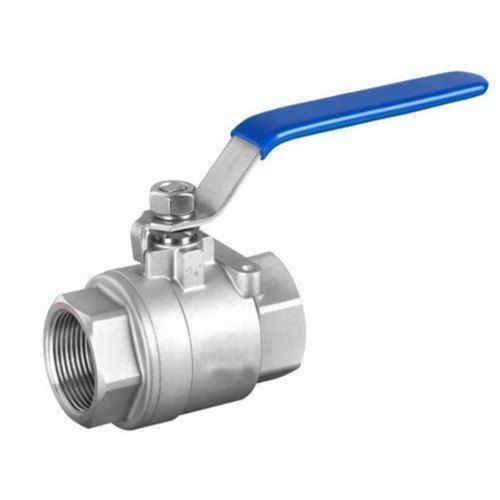
Ball Valve Manufacturer in Jamnagar
Price 700 INR / Unit
Minimum Order Quantity : 1 Number
Media : Other, Water, Oil, Gas
Material : Brass
Finish : Chrome Plated
Application : Industrial, Plumbing, Agriculture
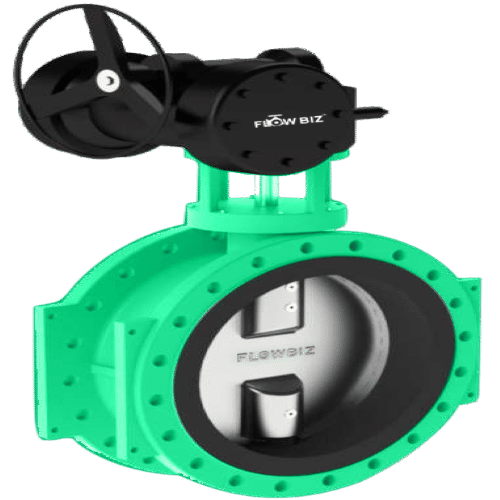
Double Eccentric Design Offset Disc Double Flange Butterfly Valve
Price 6000 INR / Unit
Minimum Order Quantity : 1 Number
Media : Other, Water, Oil, Gas, Steam
Material : Other, Carbon Steel / Cast Iron / Stainless Steel
Finish : Epoxy Painted / Powder Coated
Application : Water Supply, Wastewater, Industrial Pipelines
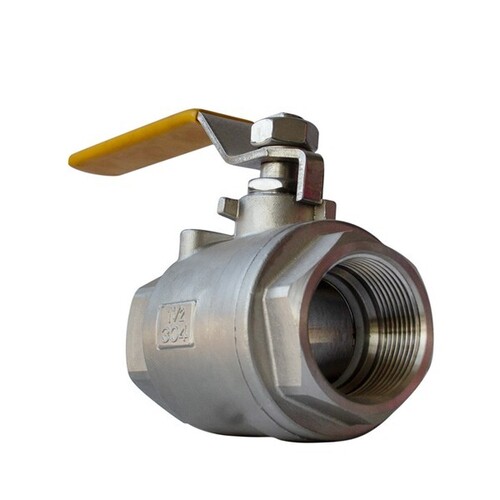
Compact Best Ball Valve
Price 2000.0 INR / Pack
Minimum Order Quantity : 1 Pack
Media : Other, Water, Gas, Oil, Air, Steam
Material : Stainless Steel
Finish : Polished
Application : Industrial, Chemical, Water Control
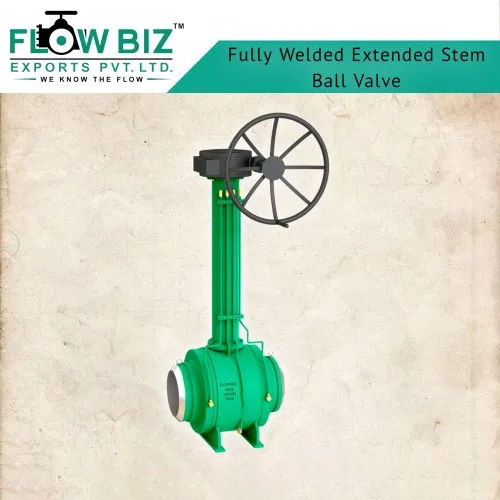
Fully Welded Extended Stem Ball Valve
Price 10000 INR / Unit
Minimum Order Quantity : 1 Unit
Media : Gas
Material : Brass
Finish : Painted
Application : Industrial

 Send Inquiry
Our Products
- Needle Valve
- Ball Valve
- Globe Valve
- Gate Valve
- Y Type Strainer
- Piston Valve
- Check Valve
- Sight Glass
- Butterfly Valve
- Swing Check Valve
- Damper Valve
- Basket Strainer
- Pressure Reducing Valve
- Double Block Bleed Valve
- Moisture Separator
- Forged Valve
- Diaphragm Valve
- Mini Ball Valve
- Forbes Marshall PRV
- T Type Strainer
- Plug Valve
- Blow Down Valve
- Air Valve
- Non Return Valve
- Safety Valve
- Steam Trap
- Gasket
- L&T Ball Valve
- L&T Butterfly Valve
- AUDCO Ball Valve
- SPIRAX Marshall PRV
- Solenoid Valve
- oxygen
- roto seal coupling
- straight union
- flow control
- ptfe sheets
- ptfe
- rubber products
- felt products
- Asbestos products
- Engineered plastics products
- rubber seals
- rubber gasket
- Sight Glasses
- Jacketed Valves
- flush bottom valve
- strainer
- Sluice Gate Valve
- Slab Gate Valve
- PTFE Lined Valve
- PTFE Lined Valves


416,417 4th Floor, A Block Safal 8, Ajit Mill, Cross Rd, Rakhial,Ahmedabad - 380023, Gujarat, India

Mr Shakir Ansari
(Director)
Mobile :08071780343
 Send Inquiry
 Send SMS
Developed and Managed by Infocom Network Private Limited.
