
Call us now :08071780343
 Send Inquiry
 Send Inquiry
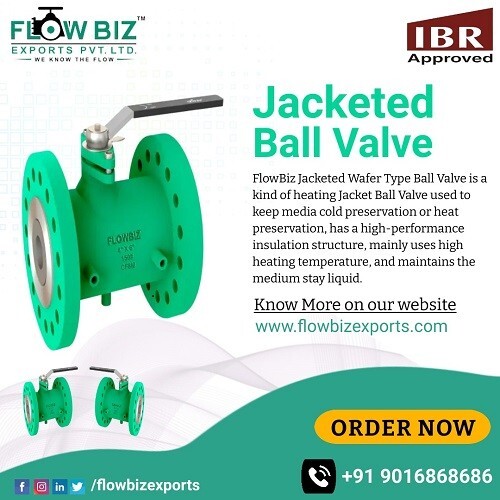
Industrial Jacketed Ball Valve Manufacturer in Surat
Price 800.0 INR/ Unit
MOQ : 1 Unit
Industrial Jacketed Ball Valve Manufacturer in Surat Specification
- Structure
- Jacketed Ball Valve
- Caliber
- Full Bore / Reduced Bore
- Channels
- 2 Way / 3 Way
- Connection
- Flanged / Screwed / Socket Weld
- Pressure
- PN16, PN25, Class 150, Class 300
- Material
- Stainless Steel, Carbon Steel, Alloy Steel
- Power
- Manual
- Media
- Water, Oil, Gas, Steam
- Temperature of Media
- -29°C to 200°C
- Port Size
- DN15 to DN200
- Flange
- ANSI, DIN, BS Standards
- Finish
- Polished / PTFE Coated
- Application
- Chemical, Pharmaceutical, Petrochemical, Food, Oil & Gas Industries
- Size Range
- 1/2" to 8"
- Body Style
- Two Piece / Three Piece
- Automation
- Available on Request
- End Connection
- Butt Weld / Flanged / Socket Weld
- Seat Material
- PTFE / RPTFE / Metal
- Fire Safe Design
- Available
- Jacket Design
- Double Jacketed / Single Jacketed
- Leakage Class
- Class VI
- Corrosion Resistance
- High
- Operation
- Lever / Gear / Actuator Operated
- Body Material
- CF8 / CF8M / WCB / Alloy 20
- Testing Standard
- API 598 / BS EN 12266
Industrial Jacketed Ball Valve Manufacturer in Surat About
High-Performance Jacketed Ball Valves | FlowBiz Valves
FlowBiz Valves is a premier, engineering-driven manufacturer, supplier, and global exporter of high-integrity Jacketed Ball Valves in India. Operating from our state-of-the-art heavy engineering and production hubsincluding Surat, Gujaratwe manufacture these specialized thermal-regulation valves. They are built to comply with strict industry standards, utilizing high-quality raw materials and modern machining technology to fulfill your comprehensive fluid processing needs.
Standard non-insulated valves fail when handling viscous materials like liquid sulfur, bitumen, asphalt, resins, tar, and heavy crude derivatives. These substances solidify or crystallize at ambient temperatures, clogging the internal cavity and seizing the ball mechanism. The FlowBiz Jacketed Ball Valve addresses this challenge by welding a fabricated steel sheet heating/cooling jacket directly onto the valve body. When connected to hot media (such as steam or hot oil), the jacket uniformly heats the inner valve casing, keeping the process media completely liquid, ensuring a free flow of liquid or gas, and preventing clogging when the valve is closed.
Technical Specifications & Compliance Matrix
Our jacketed production series is precision-machined and rigorously verified to satisfy strict international pressure vessel and thermal safety criteria:
| Parameter | Technical Specification & Engineering Limits |
| Footprint Profile | Oversized end flanges matching the jacket diameter for direct line pairing |
| Bore Configuration | Full Bore (Unobstructed throughput) or Reduced Bore (Cost optimized) |
| Jacket Layer Options | Single Jacketed (Moderate thermal control) or Double Jacketed (Superior regulation) |
| Design Compliance | Engineered in accordance with BS 5351, ANSI B16.34, and API 6D standards |
| Testing Protocols | 100% hydrostatically and pneumatically verified per API 598 and BS EN 12266 |
| Isolation Rating | ANSI/FCI 70-2 Leakage Class VI (Absolute bubble-tight containment) |
| Flange Standard Drill | Globally compatible with ANSI, DIN, and BS dimensional frameworks |
| Safety Upgrades | Fire-Safe Design and automated top works ready |
Strategic Design & Thermal Management Features
1. Advanced Single vs. Double Jacketed Configurations
To protect your process line from thermal drop-offs, we provide two tailored structural heating configurations:
-
Single Jacketed Design: Incorporates a fabricated heating layer covering the central valve body capsule. It provides excellent, cost-effective thermal control for standard utility fluids and process substances requiring moderate temperature maintenance.
-
Double Jacketed Design: Features an extended jacket extending from one flange face across the entire valve body to the opposite flange face. This provides superior and highly consistent temperature regulation, ensuring uniform heating or cooling. It is preferred for critical processes handling highly temperature-sensitive fluids that solidify at minor thermal limits.
2. Full Bore vs. Reduced Bore Operational Flexibility
-
Full Bore Layout: The internal diameter of the flow path through the rotating ball perfectly matches the connected pipeline. This creates an unobstructed flow path that minimizes pressure dropsexcellent for thick slurries, heavy hydrocarbons, or processes needing maximum capacity throughput.
-
Reduced Bore Layout: Features a slightly smaller port size than the connected pipe diameter. While it offers slightly restricted flow, it provides a compact, lightweight, and cost-effective valve body for applications where high-capacity throughput is not essential.
3. Safety-Focused Trim and Seat Optimization
Achieving a long valve lifespan requires matching the internal sealing elements to the unique chemical and thermal parameters of your process fluid:
-
PTFE & RPTFE Seats: Reinforced polymers providing near-total chemical inertness, zero moisture absorption, and smooth operation across general chemicals, corrosive liquids, and pharmaceuticals.
-
Severe-Service Metal Seats: Precision hard-faced metallic options engineered to handle extreme temperatures and highly abrasive media where soft polymers would fail, ensuring long-term wear resistance.
4. Advanced Actuation & System Integration
Manual and automated configurations adapt easily to your plant's layout and operational frequency:
-
Manual Lever Operation: Suitable for simpler, on-site tasks or where low-frequency operation suffices.
-
Automated Actuator Systems: Equipped with specialized gear operators, pneumatic cylinders, or electric motorized actuators. These systems are highly recommended when remote SCADA control, frequent high-speed switching, or precise flow regulation is necessary.
                          Thermal Fluid Entry Port

                                       (Steam / Hot Oil)


                         Welded Fabricated Jacket


 Inner Valve Body    Continual Heat Transfer   Media Stream
  Capsule Warmed                                       Remains Liquid
Safety Engineering & Severe-Service Durability
-
Certified Fire-Safe Configuration: Essential for chemical plants, petrochemical refineries, and oil & gas facilities handling volatile media. In the event of an unexpected facility fire that destroys the soft polymer seats, secondary backup metal-to-metal sealing boundaries engage. This maintains valve structural integrity and prevents hazardous fluid leakage, enhancing plant safety.
-
Class VI Bubble-Tight Protection: Each unit undergoes rigorous testing in accordance with API 598 and BS EN 12266 standards. This process validates pressure containment and checks for seat leaks, ensuring the valves consistently provide zero-leakage performance under testing conditions to satisfy demanding environmental rules.
-
Rigid Casing and Compact Construction: Engineered to manage high pipeline pressures and thermal stresses. The compact design ensures direct alignment and an excellent surface finish, making it suitable for strict clean-room requirements in the pharmaceutical and food processing industries.
Frequently Asked Questions (FAQs)
Q: Why is a jacketed ball valve mandatory for viscous process streams?
A: Many heavy industrial fluids, such as liquid sulfur, bitumen, resins, and tars, are highly temperature-sensitive and solidify into thick cruds or crystalline masses at ambient temperatures. If a standard non-insulated valve is used, the stagnant fluid inside the body cavity cools down and hardens, locking the ball and damaging the internal trims. A jacketed ball valve circulates steam, hot oil, or hot water through an external shell surrounding the pressure casing, keeping the internal process media completely liquid to ensure smooth flow and reliable, jam-free operation.
Q: How do you select the correct end connection when integrating jacketed valves?
A: Because the fabricated heating jacket increases the outer diameter of the valve body, the end flanges must be oversized compared to standard non-insulated valves. For example, a 2-inch jacketed valve typically features the end flange dimensions of a standard 3-inch or 4-inch valve to leave room for the jacket wall and the external steam supply ports. FlowBiz ensures all flanged setups are machined to match global ANSI, DIN, or BS standards, making installation or pipeline replacement straightforward.
Q: What benefits do users gain from the valve's high corrosion resistance and finish?
A: FlowBiz utilizes premium, traceable metallurgies (such as stainless steel or carbon steel) combined with advanced surface finishing passivations. This precise manufacturing process creates a rugged casing that resists aggressive chemical vapors, high-temperature washdowns, and harsh coastal humidity. This results in fewer maintenance interventions, reduced downtime, and a longer operational life, maximizing long-term process value and efficiency for the user.
Q: Why choose FlowBiz as your trusted jacketed ball valve partner in Surat?
A: Operating from Surat, FlowBiz Valves balances precision heavy industrial manufacturing with strict compliance to global validation benchmarks like API 6D and API 598. By hydrostatically and pneumatically proof-testing 100% of our production line to verify Class VI zero-leakage performance before final packing, we eliminate operational risks in the field. Our ability to deliver high-quality, fully customized jacketed valves tailored to your exact application footprint makes us a trusted supply chain partner across India and global export markets.
Tell us about your requirement

Price:
Quantity
Select Unit
- 50
- 100
- 200
- 250
- 500
- 1000+
Additional detail
Mobile number
Email

More Products in Ball Valve Category
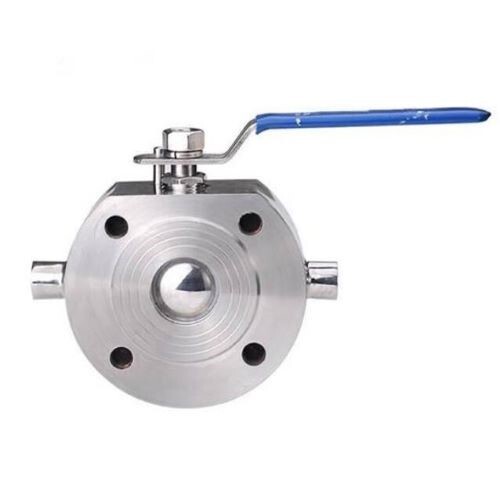
Wafer Style Ball Valve
Price 2000 INR / Unit
Minimum Order Quantity : 1 Number
Application : Industrial, Chemical, Water Treatment
Material : Other, Stainless Steel, Carbon Steel, Alloy Steel
Media : Other, Water, Oil, Gas, Chemical
Caliber : Full Bore
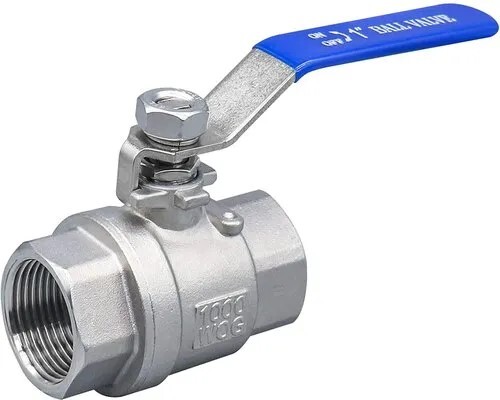
Best WOG Ball Valve
Price 2000.0 INR / Number
Minimum Order Quantity : 1 Number
Application : Industrial, Petrochemical, Water Treatment
Material : Stainless Steel
Media : Other, Water, Oil, Gas
Caliber : Standard
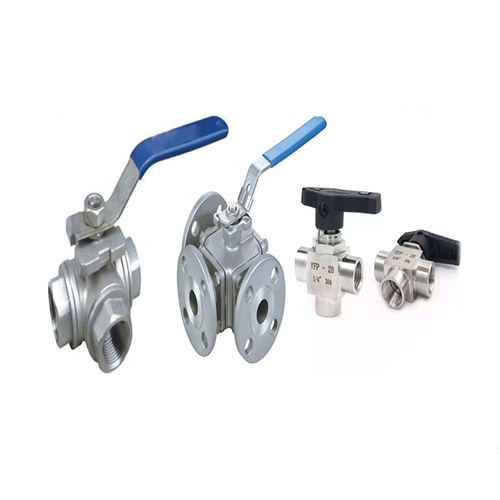
Flow Control Valve Ball
Price 5000.0 INR / Piece
Minimum Order Quantity : 1 Piece
Application : Industrial
Material : Other, Cast Iron
Media : Water
Caliber : Standard
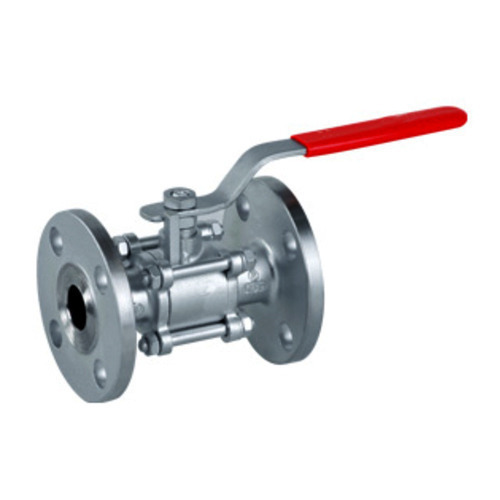
SS 316 High Pressure Three Piece Ball Valve
Price 500.0 INR / Piece
Minimum Order Quantity : 1 Piece
Application : Industrial, Chemical Plants, Petrochemical, Water Treatment, Oil & Gas
Material : Other, Stainless Steel, Carbon Steel, Brass
Media : Other, Water, Oil, Gas, Air, Steam
Caliber : Standard

 Send Inquiry
Our Products
- Needle Valve
- Ball Valve
- Globe Valve
- Gate Valve
- Y Type Strainer
- Piston Valve
- Check Valve
- Sight Glass
- Butterfly Valve
- Swing Check Valve
- Damper Valve
- Basket Strainer
- Pressure Reducing Valve
- Double Block Bleed Valve
- Moisture Separator
- Forged Valve
- Diaphragm Valve
- Mini Ball Valve
- Forbes Marshall PRV
- T Type Strainer
- Plug Valve
- Blow Down Valve
- Air Valve
- Non Return Valve
- Safety Valve
- Steam Trap
- Gasket
- L&T Ball Valve
- L&T Butterfly Valve
- AUDCO Ball Valve
- SPIRAX Marshall PRV
- Solenoid Valve
- oxygen
- roto seal coupling
- straight union
- flow control
- ptfe sheets
- ptfe
- rubber products
- felt products
- Asbestos products
- Engineered plastics products
- rubber seals
- rubber gasket
- Sight Glasses
- Jacketed Valves
- flush bottom valve
- strainer
- Sluice Gate Valve
- Slab Gate Valve
- PTFE Lined Valve
- PTFE Lined Valves


416,417 4th Floor, A Block Safal 8, Ajit Mill, Cross Rd, Rakhial,Ahmedabad - 380023, Gujarat, India

Mr Shakir Ansari
(Director)
Mobile :08071780343
 Send Inquiry
 Send SMS
 Call Me Free
Developed and Managed by Infocom Network Private Limited.
