
Call us now :08071793447
 Send Inquiry
 Send Inquiry
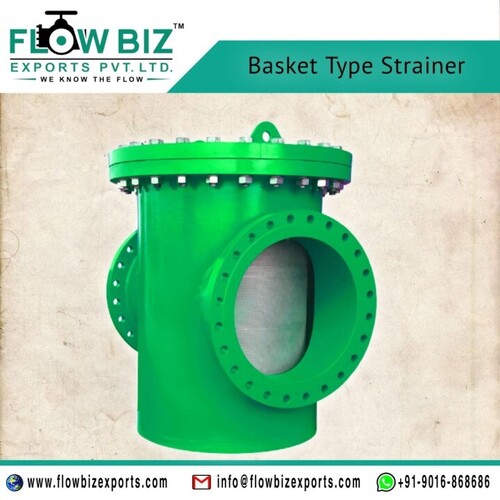
Industrial Pipeline Basket Strainer Manufacturer Gandhidham
Price 2000.0 INR/ Unit
MOQ : 1 Unit
Industrial Pipeline Basket Strainer Manufacturer Gandhidham Specification
- Control System
- PLC
- Material
- Cast Iron
- Features
- Best Quality
- Usage
- Pipelines Carrying Liquids, Gases, Or Steam.
- Size
- 1/2 inch to 24 inch
- Power
- Manual
- Pressure
- Other PSI
- Media
- Other
- Color
- Green
About Industrial Pipeline Basket Strainer Manufacturer Gandhidham
High-Capacity Simplex Basket Strainers: Advanced Pipeline Protection by FlowBiz Exports
In industrial fluid mechanics, protecting sensitive downstream equipmentsuch as pumps, control valves, meters, and nozzlesfrom particulate contamination is vital for system uptime. FlowBiz Exports Pvt. Ltd. delivers robust filtration solutions with our premium line of Simplex Basket Strainers. Engineered to surpass the capacity limitations of standard Y-strainers, these heavy-duty components are manufactured at our advanced facility, positioning us as a leading basket strainer manufacturer in Gandhidham.
Our simplex basket strainers are available in both precision-cast and custom-fabricated designs, depending on your systems pressure profile and flow velocity. Characterized by their spacious, bucket-shaped internal geometries, these strainers provide an exceptionally large filtration surface area. This expansive area allows the basket to store massive volumes of debris and dirt without causing a significant pressure drop ($\Delta P$) across the pipeline, making them highly efficient for heavy-duty process lines.
Technical Specifications & Parameter Matrix
FlowBiz basket strainers are designed to handle demanding fluid, gas, and steam dynamics while maintaining structural integrity.
| Parameter | Size Range | Connection Type / Style | Pressure Rating |
| Screwed / Socket Weld |
inch to 2 inches (DN15 to DN50) |
NPT/BSP Threaded or Socket Weld Ends | Class 150 (150#) |
| Flanged / Butt Weld |
inch to 24 inches (DN15 to DN600) |
Raised Face Flanges or Butt Welding Ends | Class 150 (150#) to Custom High-Pressure |
Key Structural Attributes:
-
MOC (Material of Construction): Premium-grade Cast Iron, Cast Carbon Steel, or Stainless Steel.
-
Flow Direction: Fluids enter the internal chamber and flow from the inside to the outside of the mesh basket, trapping heavy debris securely within the basket floor for clean removal.
-
Drain Port: Outfitted with an integrated threaded drain plug at the base of the housing to facilitate quick liquid evacuation prior to servicing.
-
Surface Coating: Finished with a signature, highly visible protective green industrial coating that shields the cast body from atmospheric corrosion and simplifies asset tracking.
Key Benefits & Engineering Edge
1. Superior Dirt-Holding Capacity
The physical size of a simplex basket strainer provides a significantly larger platform for the filtration media compared to a compact Y-type unit. While this increases the structural weight of the unit, the massive internal area drastically extends the operational intervals between cleaning cycles, minimizing labor costs.
2. Dual Control Integration (Manual + PLC Automation)
To satisfy modern industrial automation frameworks, our strainers combine rugged manual maintenance access with PLC-controlled monitoring. By pairing the strainer with differential pressure transmitters, the system can continuously track clogging levels and alert plant operators precisely when a cleaning cycle is required.
3. Equipment Longevity and Asset Protection
By cleanly separating scale, rust, welding slag, and foreign particulates from process liquids, gases, or steam, these strainers halt abrasive wear before it reaches delicate machinery. This preserves critical valve seats and pump impellers, reducing facility maintenance costs.
Comprehensive Supply Chain from Gandhidham, India
Operating out of the strategic industrial corridor of Gandhidham, Gujarat, FlowBiz Exports Pvt. Ltd. acts as an integrated exporter, supplier, and trader. Our proximity to major maritime ports guarantees accelerated export processing and reliable international logistics. We accommodate bulk orders and maintain a diverse ready inventory to ensure your plant upgrades and expansion projects face zero procurement delays.
Frequently Asked Questions (FAQs)
Q: How is a simplex basket strainer physically installed and oriented within a pipeline?
A: Simplex basket strainers must be installed strictly in horizontal pipelines with the bucket housing pointing vertically downward. The unit is connected via flanged, threaded, or butt weld joints at critical protection pointstypically directly upstream of pumps, flow meters, and expensive control valvesensuring all incoming media passes through the filter mesh first.
Q: Why is cast iron preferred over other metals for standard industrial basket strainers?
A: Cast iron offers exceptional structural density, high tensile strength, and natural vibration-dampening qualities, making it ideal for absorbing the continuous hydraulic shocks present in pipeline systems. Additionally, it provides excellent baseline resistance to internal erosion and external rust at a highly cost-effective price point for water, gas, and low-pressure steam utilities.
Q: What is the step-by-step process for safely cleaning a FlowBiz basket strainer?
A: 1. Isolate the strainer by closing the upstream and downstream valves.
2. Open the threaded base drain plug to safely depressurize the chamber and evacuate trapped fluid.
3. Loosen the top cover bolts manually and remove the structural chamber lid.
4. Lift out the heavy-duty basket, clear the collected debris, wash the mesh screen, and inspect the cover gasket.
5. Re-insert the clean basket, secure the lid tightly, close the drain, and slowly reintroduce pipeline flow.
Q: How does PLC control integration optimize facility filtration processes?
A: When differential pressure (Delta P) sensors are linked to a facility's centralized PLC, the automated system continuously measures the pressure variance between the inlet and outlet ports. As debris accumulates, the pressure gap widens. Once it hits a pre-programmed threshold, the PLC triggers a system alarm, allowing maintenance crews to clean the basket exactly when needed rather than relying on arbitrary, time-based maintenance schedules.
Q: In what specific scenarios should an engineer opt for a basket strainer rather than a Y-strainer?
A: An engineer should opt for a basket strainer when the pipeline media contains a high concentration of solids or when the system cannot be shut down frequently for cleaning. Because basket strainers hold significantly more debris and offer lower fluid resistance than Y-strainers, they are the preferred choice for high-volume cooling water lines, chemical process streams, and large-diameter fuel transfer loops.
Tell us about your requirement

Price:
Quantity
Select Unit
- 50
- 100
- 200
- 250
- 500
- 1000+
Additional detail
Mobile number
Email

More Products in strainer Category

Y Type Strainer Manufacturer in Kheda
Price 1000 INR / Unit
Minimum Order Quantity : 1 Number
Material : Cast Iron, Cast Steel, Stainless Steel, Bronze
Features : Corrosion resistant, Easy maintenance, High durability
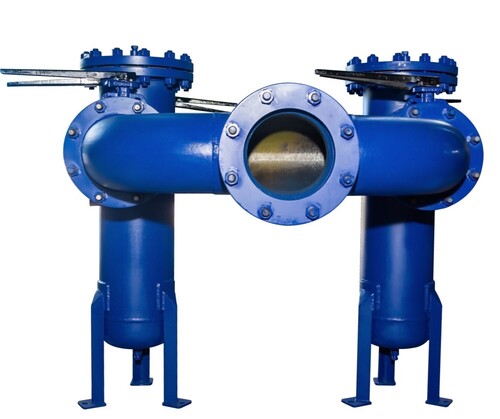
Duplex Type Strainer Manufacturer in India
Price 2000 INR / Unit
Minimum Order Quantity : 1 Number
Material : Cast Iron/Carbon Steel/Stainless Steel
Features : Duplex design allows continuous operation during maintenance
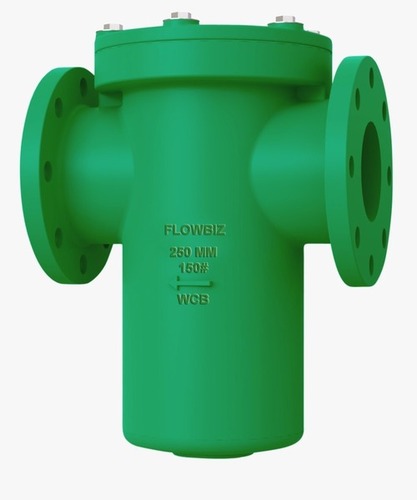
Pipeline Basket Type Strainer
Price 600.0 INR / Number
Minimum Order Quantity : 1 Number
Material : MS
Features : Good Quality
Usage : Industrial
Color : Green
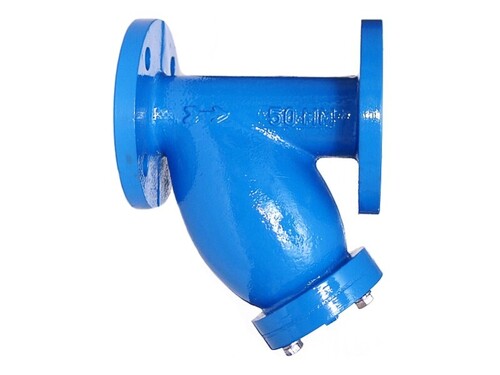
Fabricated Y Strainer
Price 3400.0 INR / Number
Minimum Order Quantity : 1 Number
Material : MS
Features : Good Quality
Usage : Industrial
Color : Blue

 Send Inquiry
Our Products
- Needle Valve
- Ball Valve
- Globe Valve
- Gate Valve
- Y Type Strainer
- Piston Valve
- Check Valve
- Sight Glass
- Butterfly Valve
- Swing Check Valve
- Damper Valve
- Basket Strainer
- Pressure Reducing Valve
- Double Block Bleed Valve
- Moisture Separator
- Forged Valve
- Diaphragm Valve
- Mini Ball Valve
- Forbes Marshall PRV
- T Type Strainer
- Plug Valve
- Blow Down Valve
- Air Valve
- Non Return Valve
- Safety Valve
- Steam Trap
- Gasket
- L&T Ball Valve
- L&T Butterfly Valve
- AUDCO Ball Valve
- SPIRAX Marshall PRV
- Solenoid Valve
- oxygen
- roto seal coupling
- straight union
- flow control
- ptfe sheets
- ptfe
- rubber products
- felt products
- Asbestos products
- Engineered plastics products
- rubber seals
- rubber gasket
- Sight Glasses
- Jacketed Valves
- flush bottom valve
- strainer
- Sluice Gate Valve
- Slab Gate Valve
- PTFE Lined Valve
- PTFE Lined Valves


416,417 4th Floor, A Block Safal 8, Ajit Mill, Cross Rd, Rakhial,Ahmedabad - 380023, Gujarat, India

Mr Shakir Ansari
(Director)
Mobile :08071793447
 Send Inquiry
 Send SMS
Developed and Managed by Infocom Network Private Limited.
